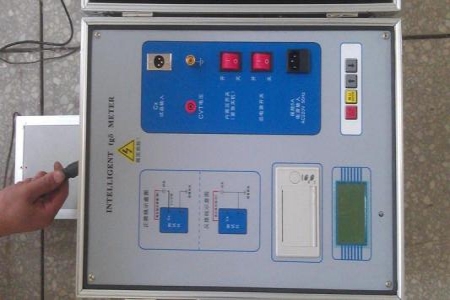
TAG-6000 High-Voltage Wireless Phase Detector: Key Detection Tool in Power Systems
Introduction
In the construction and maintenance of power systems, ensuring the correctness of phase relationships between various lines or substations is crucial. The TAG-6000 high-voltage wireless phase detector, as an advanced wireless phase detection tool, can perform phase comparison without interrupting power supply, which is of great significance for ensuring the safe and stable operation of the power grid.
Product Overview
The TAG-6000 high-voltage wireless phase detector is a wireless phase detector specifically designed for the power industry, used to detect phase relationships in high-voltage power lines or substations. It adopts wireless transmission technology and power electronic detection technology, enabling remote phase comparison and frequency measurement, improving the convenience and safety of detection.
Technical Features
Wireless Transmission: Adopts wireless transmission technology, avoiding the connection limitations of traditional detection methods and improving detection flexibility.
High Precision: High phase difference accuracy, capable of precisely determining phase relationships to ensure stable operation of power systems.
Long-Distance Detection: The transmission distance between the transmitter and receiver host exceeds 130 meters, suitable for long-distance detection tasks.
Wide Voltage Range: Applicable to voltage levels from 6kV to 220kV, meeting the detection needs of various high-voltage power equipment.
Phase Sequence Judgment: Capable of accurately determining phase sequence, helping power workers quickly identify and resolve issues.
Working Principle
Transmitter Unit: The transmitter unit is placed on the high-voltage line under test, obtaining the phase signal through inductive coupling and converting it into a wireless signal for transmission.
Receiver Unit: The receiver unit is responsible for receiving the wireless signal sent by the transmitter unit and performing phase comparison through the internal processing unit to determine the phase relationship between lines.
Usage Steps
Preparation Phase: Confirm that the transmitter unit and receiver unit have sufficient battery power, and select appropriate sensors according to the detection target.
Transmitter Unit Setup: Place the transmitter unit on the high-voltage line or equipment under test.
Receiver Unit Configuration: Select the corresponding number of receiver units as needed and perform configuration.
Signal Reception and Processing: After receiving the signal, the receiver unit performs data processing and display.
Result Analysis: Determine the phase relationship based on the displayed results, and take corresponding adjustment measures if necessary.
Application Scenarios
New Construction Projects: Used to confirm phase consistency when building new substations or erecting new high-voltage lines.
Renovation Projects: Ensuring phase matching between new and old equipment when upgrading existing power facilities.
Routine Maintenance: Regularly perform phase verification on power facilities to prevent accidents caused by phase errors.
Technology Development Trends
Intelligence: Integration of artificial intelligence technology to improve analysis accuracy and efficiency.
Multi-Function Integration: In addition to basic phase detection, other detection functions may be integrated.
Remote Monitoring: Support wireless transmission for remote monitoring and data analysis.
Conclusion
The TAG-6000 high-voltage wireless phase detector, with its features of wireless transmission, high precision, and long-distance detection, plays an important role in the detection and maintenance of power equipment. With continuous technological development, future wireless phase detectors will become more intelligent and efficient, providing stronger support for the safe operation of power systems.
We hope this article overview about the TAG-6000 high-voltage wireless phase detector provides you with valuable reference. If you need more detailed information or have specific technical questions, please feel free to let us know.