Online Partial Discharge Detector: A Real-Time Monitoring Tool for Power System Maintenance
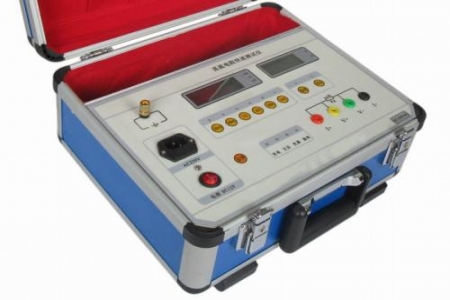
The online partial discharge detector is a professional device used for continuous monitoring of partial discharge (PD) phenomena in high-voltage electrical equipment. This instrument is typically used for real-time monitoring of power system health to detect potential insulation problems as early as possible. Below is an article overview about online partial discharge detectors:
Online Partial Discharge Detector: A Real-Time Monitoring Tool for Power System Maintenance
Abstract
This article introduces the functions, working principles, application areas, and important role of online partial discharge detectors in power system maintenance. Through this information, readers can better understand how to utilize this tool to ensure the safe and reliable operation of high-voltage electrical equipment.
Introduction
With the continuous expansion of power system scale, ensuring the stable operation of power facilities has become increasingly important. Partial discharge, as a common phenomenon, may cause early faults in the insulation system of high-voltage electrical equipment. Therefore, online partial discharge detectors, due to their continuous monitoring capability, are playing an increasingly important role in the maintenance of power systems.
Functional Features of Online Partial Discharge Detector
Real-Time Monitoring: Capable of continuously monitoring partial discharge phenomena in high-voltage electrical equipment.
High Sensitivity: Can detect very weak partial discharge signals.
Strong Anti-Interference Capability: Can work effectively even in complex environments.
Multiple Detection Technologies: Can adopt detection methods such as Ultra-High Frequency (UHF), Transient Earth Voltage (TEV), Ultrasonic (US), and Pulse Current (PC).
Remote Access: Supports remote monitoring and data transmission, facilitating data analysis and decision support.
Working Principle
The online partial discharge detector mainly operates by capturing various physical signals generated by partial discharge, including:
Pulse Current Method: Measures by detecting current pulses generated by partial discharge.
Ultrasonic Detection Method: Captures ultrasonic signals generated by partial discharge.
UHF Detection Method: Detects UHF electromagnetic wave signals generated by partial discharge.
Ground Electric Wave Detection Method: Captures ground electric wave signals generated by partial discharge.
Usage Method
Installation and Configuration: Install the detector at monitoring points according to the equipment manual and perform necessary configuration.
Calibration: Calibrate the detector using a standard signal source.
Continuous Monitoring: Enable continuous monitoring mode to automatically record data.
Data Analysis: Analyze collected data through software to evaluate partial discharge levels.
Warning and Alarm: When the partial discharge level exceeds the preset threshold, the system issues a warning or alarm.
Application Areas
Transformers: Monitor partial discharge phenomena inside transformers.
Switchgear: Install online partial discharge detectors to continuously monitor partial discharge within switchgear.
Cables: Use high-frequency instrument transformers to monitor partial discharge in cables.
GIS Equipment: Detect UHF band pulse electromagnetic wave signals outside GIS equipment.
Notes
Safe Operation: Ensure understanding of all safety measures before use.
Regular Calibration: Regularly calibrate the instrument to ensure the accuracy of test results.
Professional Training: Operators should receive professional training and be familiar with the instrument usage methods.
Data Protection: Ensure secure storage and transmission of data, complying with relevant privacy regulations.
Conclusion
The online partial discharge detector is one of the indispensable tools in power system maintenance. It not only helps technicians detect potential equipment problems in a timely manner but also improves the overall reliability and safety of power systems. With technological advancement, the performance of such detectors will continue to improve, providing stronger support for the future development of the power industry.
Please note that this article provides an overview introduction. For specific usage, please refer to the user manual of the specific model or consult the manufacturer for detailed guidance and operating instructions.