High-Precision Measurement: Capable of Accurately Measuring Dielectric Loss Factor and Capacitance Values
To write an article about "High-Precision Measurement: Accurately Measuring Dielectric Loss Factor and Capacitance Values," we can discuss the following aspects:
Introduction
Dielectric loss factor and capacitance value are key parameters for evaluating the insulation performance of electrical equipment. The dielectric loss factor (commonly denoted as tanδ) represents the ratio of energy loss to stored energy in a dielectric under an alternating electric field; capacitance reflects the ability of the dielectric to store charge. These two indicators are crucial for assessing the health of power equipment (such as transformers, cables, motors, and capacitors). This article explores how modern technology enables high-precision measurement of these parameters.
Measurement Principle
Dielectric Loss Factor
The basic principle of dielectric loss factor measurement lies in applying an alternating voltage to the test sample and measuring the resulting current. Based on Ohm's Law and the characteristics of capacitive current, the dielectric loss factor can be calculated.
Capacitance value measurement is typically based on the phase difference between AC voltage and current at a known frequency, calculated from voltage and current amplitudes.
Measurement Methods and Technologies
Frequency Response Analysis (FRA)
Frequency response analysis is a widely used technique that evaluates the overall condition of insulation systems by measuring changes in dielectric loss factor and capacitance values across a range of frequencies.
Temperature Compensation
Since dielectric loss factor and capacitance values change with temperature, temperature compensation is needed to obtain more accurate results.
Digital Signal Processing (DSP)
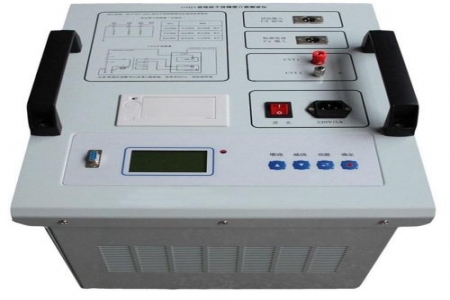
Modern Dielectric Loss Testers typically use advanced digital signal processing technology to improve measurement accuracy and stability.
Importance of High-Precision Measurement
Enhanced Safety
Accurate measurement results help identify potential faults early, thereby avoiding safety accidents caused by equipment damage or system failure.
Optimized Maintenance Planning
Through precise monitoring of dielectric loss factor and capacitance values, more reasonable maintenance strategies can be developed, reducing unnecessary maintenance costs.
R&D Support
In the R&D process of new materials and technologies, high-precision measurement data is crucial for validating theoretical models and improving designs.
Real Application Case
Transformer Insulation Assessment
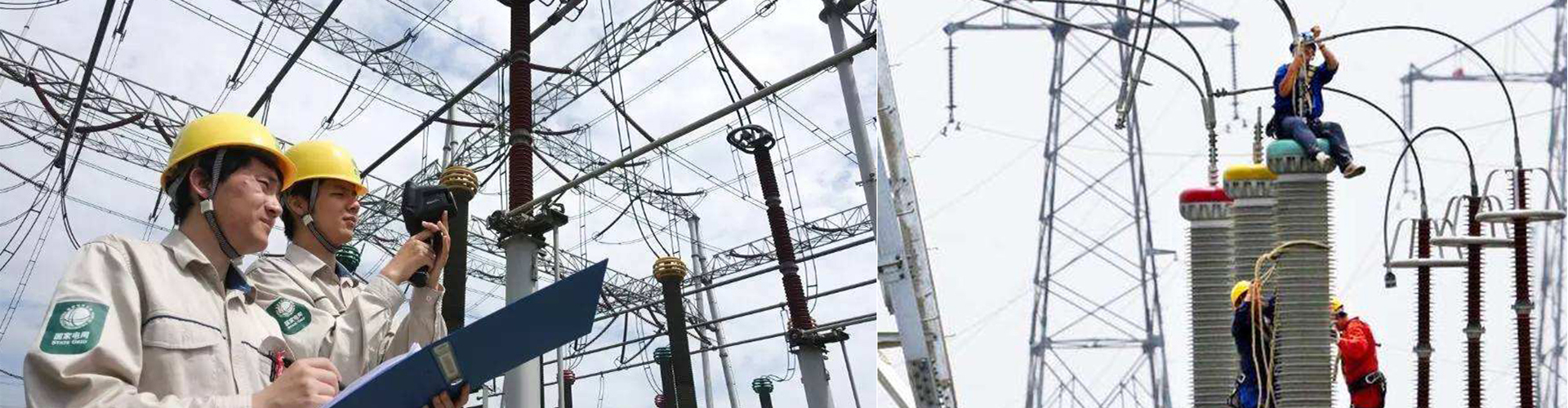
Transformers are key components of power systems, and regular inspection of their insulation condition is particularly important. By measuring dielectric loss factor and capacitance values, issues such as insulation aging or moisture can be detected in time.
Cable Line Testing
For long-distance cable lines, measuring dielectric loss factor and capacitance values helps detect defects or non-uniformities in the insulation layer, preventing potential faults.
Motor Insulation Monitoring
Motors may be affected by factors such as overheating and vibration during operation; regular inspection of their insulation performance is very important to ensure normal motor operation.
Conclusion
High-precision measurement of dielectric loss factor and capacitance values is of great significance for ensuring the reliability and safety of power systems. As technology advances, these measurement methods will become more efficient and precise, providing strong support for the maintenance and management of power equipment.
The above content summarizes the basic concepts, principles, technologies, and practical application cases of high-precision measurement of dielectric loss factor and capacitance values. We hope this article provides useful information. If you need further details on any specific aspect, please let us know.