Transformer Turns Ratio Tester (TTR or Ratio Tester)
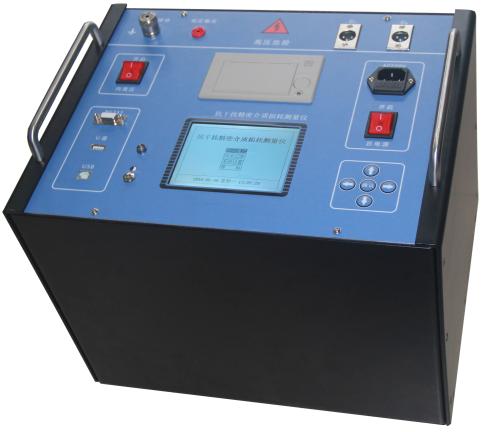
is a key specialized instrument used in power systems to measure the turns ratio and connection group of transformers and instrument transformers (PT/CT). It is a mandatory test item in transformer factory testing, commissioning testing, and preventive testing.
The following is a detailed explanation of the core functions, principles, and applications of this instrument:
1. Main Applications
Verify Design Parameters: Check whether the actual transformer ratio conforms to nameplate data and design requirements.
Fault Diagnosis:
Inter-Turn Short Circuit: If the ratio of a certain phase is abnormal, it may indicate an inter-turn short circuit inside the winding.
Tap Changer Fault: Detect whether the on-load or off-load tap changer has good contact and whether the tap position indication is accurate.
Winding Breakage or Poor Contact: Detect lead wire welding problems through ratio deviation.
Parallel Operation Verification: Ensure that the ratios of multiple transformers operating in parallel are consistent to avoid circulating current generation.
Instrument Transformer Testing: Some high-end instruments can also be used for ratio and polarity testing of voltage transformers (PT) and current transformers (CT).
2. Working Principle
Modern ratio testers mostly adopt three-phase precision inverter power supplies and high-speed ADC sampling technology, replacing the traditional single-phase bridge method.
Basic Formula: Based on transformer principle
> is the number of turns.
Test Procedure:
Apply Voltage: The instrument internally applies a stable three-phase or single-phase AC test voltage (typically tens to hundreds of volts, far below rated voltage) to the high-voltage side (or low-voltage side) of the transformer.
Synchronous Sampling: High-precision sensors synchronously collect voltage signals from both the high-voltage and low-voltage sides.
Digital Processing: DSP (Digital Signal Processor) calculates the voltage ratio and phase difference, automatically identifying the connection group (such as Yyn0, Dyn11, etc.).
Error Calculation: Compare the measured ratio with the preset rated ratio and directly display the error percentage.
Anti-Interference Capability: Uses variable frequency technology (e.g., avoiding 50Hz power frequency interference) to maintain high accuracy in strong electromagnetic field environments.
3. Core Functional Features (2025-2026 Mainstream Models)
Fully Automatic Testing:
Blind Test Function: No need to pre-input transformer parameters; the instrument can automatically identify the high and low voltage sides, automatically determine the connection group, and automatically calculate the ratio.
One-Touch Operation: A single wiring connection can complete testing of all tap positions for all three phases.
Wide Range and High Precision:
The ratio measurement range typically covers 0.8 ~ 10000 (or even higher).
Accuracy grade can reach Class 0.1 or Class 0.2.
Multi-Function Integration:
Supports three-phase testing and single-phase testing modes.
Features vector analysis function, displaying voltage vector diagrams for intuitive group identification.
Built-in tap changer characteristic analysis, capable of plotting the ratio variation curve with tap position.
Safety Protection:
Features high/low voltage reverse connection protection, output short circuit protection, and overload protection.
Power Failure Protection: Sudden power failure during testing will not damage the instrument or test specimen.
Portable and Intelligent:
Built-in large-capacity lithium battery, suitable for field operations without power supply.
Color touch screen, Chinese menu, supports data storage, USB export, and Bluetooth printing.
4. Typical Application Scenarios
Transformer Manufacturing Plants: Factory inspection of semi-finished and finished products.
Power Installation Companies: Commissioning testing before new transformer commissioning.
Power Supply Bureau/O&M Departments: Regular preventive testing of in-service transformers (according to DL/T 596 standard).
Emergency Repair: Rapid diagnosis after transformer tripping or abnormality.
5. Common Testing Standards
In China, the following standards are mainly followed:
GB 1094.1: Power Transformers Part 1: General.
DL/T 596: Preventive Test Regulations for Electrical Equipment.
GB 50150: Standard for Handover Test of Electric Equipment in Electrical Installation Engineering.
IEC 60076: Relevant standards of the International Electrotechnical Commission.
6. Selection and Usage Recommendations
Range Selection: Select an instrument with an appropriate range based on the voltage level and maximum ratio of the transformer under test (e.g., UHV transformers require specialized high-precision instruments).
Wiring Precautions: Before testing, be sure to confirm the transformer tap changer position and fully discharge; when wiring, connect the ground wire first, then the test leads, and reverse the order when disconnecting.
Environmental Factors: Although modern instruments have strong anti-interference capability, cautious operation is still required during thunderstorms or extremely strong electromagnetic field conditions.
If you need model comparisons for specific brands (such as Wuhan Moen, Yangzhou Haotai, Baoding Tianwei, etc.), or need to understand specific test wiring diagrams, please feel free to let me know.