Key Technologies and Latest Advances of Transformer Ratio Testers
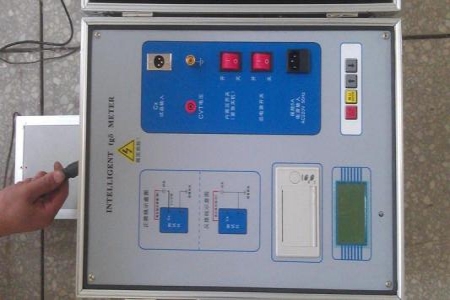
The Transformer Ratio Tester is one of the essential tools in power system maintenance, used to measure the voltage ratio between the high-voltage and low-voltage sides of a transformer, ensuring that the transformer operates according to design requirements. This article will explore the key technologies and latest advances of Transformer Ratio Testers, and discuss how these technologies improve the reliability and efficiency of power systems.
1. Introduction
With the continuous expansion of power system scale and ongoing technological advancement, Transformer Ratio Testers are also continuously developing to meet higher testing accuracy and efficiency requirements. These testers not only improve the reliability of power systems but also help technicians quickly diagnose and resolve problems.
2. Key Technologies of Transformer Ratio Testers
2.1 Automated Measurement
Technical Features: Uses a microcontroller or microprocessor as the core controller to achieve automated measurement processes.
Advantages: Simplifies operating steps, reduces human error, and improves measurement accuracy.
2.2 Multi-Function Integration
Technical Features: Integrates multiple testing functions such as ratio measurement, phase measurement, and short-circuit impedance measurement.
Advantages: One instrument can complete multiple testing tasks, improving work efficiency.
2.3 High-Precision Measurement
Technical Features: Uses high-precision sensors and advanced signal processing algorithms.
Advantages: Capable of obtaining more accurate test results, which is especially important for fault diagnosis.
2.4 User-Friendly Interface
Technical Features: Features Chinese menu display, touch screen operation, or graphical user interface.
Advantages: Makes operation more intuitive and convenient, reducing the learning curve.
2.5 Data Management and Analysis
Technical Features: Built-in data storage and analysis software.
Advantages: Convenient for users to record test results and perform data comparison and trend analysis.
3. Latest Advances
3.1 Intelligent Testing
Technical Advances: Combined with IoT technology to achieve remote monitoring and data transmission.
Advantages: Enables data analysis and fault diagnosis from locations away from the site.