High-Voltage Wireless Phase Detector: Non-Contact Measurement Improves Operational Safety
Not requiring direct contact with high-voltage lines is an important feature of high-voltage wireless phase detectors. This characteristic greatly enhances operational safety. Below is an article overview about how high-voltage wireless phase detectors improve operational safety through non-contact measurement.
High-Voltage Wireless Phase Detector: Non-Contact Measurement Improves Operational Safety
Overview
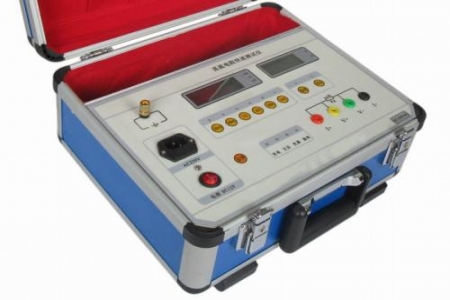
The high-voltage wireless phase detector is a specialized instrument used to detect the phase relationship of high-voltage transmission lines. Its non-contact measurement feature ensures that operators can perform phase measurement without directly contacting high-voltage lines, thereby significantly improving operational safety.
Importance of Non-Contact Measurement
Reducing Electric Shock Risk: Prevents operators from directly contacting high-voltage lines, reducing the risk of electric shock accidents.
Improving Operational Efficiency: No complex safety measures are required, reducing preparation time and improving work efficiency.
Wide Applicability: Suitable for phase measurement of various high-voltage lines, whether overhead lines or cable lines.
Working Principle
High-Voltage Wireless Phase Testers typically consist of a transmitter and a receiver. The transmitter is installed on the high-voltage line, obtaining the line voltage signal through inductive coupling, then wirelessly transmitting the signal to the receiver. After receiving the signal, the receiver processes it through a built-in processor to calculate the phase difference between lines.
Usage Steps
Install Transmitter: Install the transmitter on the high-voltage line, ensuring secure installation.
Start Receiver: Start the receiver and set the receiving parameters.
Measure Phase: The transmitter sends signals to the receiver via wireless transmission, and the receiver displays the phase difference.
Record Data: Record measurement results, including information such as phase differences between lines.
Technical Features
Non-Contact Measurement: No direct contact with high-voltage lines, improving operational safety.
Wireless Transmission: Transmits data via wireless technology, avoiding the trouble of long-distance wiring.
High Precision: Capable of accurately measuring phase differences, ensuring the accuracy of measurement results.
Remote Operation: Operators can work from a safe location away from high-voltage lines.
Safety Enhancement
Reducing Electric Shock Risk: Non-contact measurement eliminates the possibility of operators directly contacting high-voltage lines, greatly reducing the risk of electric shock.
Long Operating Distance: Operators can perform measurements from a safe distance without needing to approach high-voltage lines.
Reduced Safety Measure Costs: No complex personal protective equipment and safety measures are required, reducing operational costs.
Improved Operational Efficiency: Simplifies preparation work, making operations more efficient.
Notes
Safe Operation: Although non-contact measurement improves safety, safety operating procedures must still be followed.
Correct Installation: Ensure the transmitter is correctly installed on the high-voltage line.
Environmental Factors: Pay attention to temperature, humidity, and other conditions in the testing environment to ensure the accuracy of test results.
Conclusion
High-voltage wireless phase detectors significantly improve operational safety through non-contact measurement technology, providing safer and more reliable solutions for power system maintenance and fault diagnosis.
The above is an overview of how high-voltage wireless phase detectors improve operational safety through non-contact measurement. If you need more detailed information or an introduction to specific applications, please let me know your specific requirements.