Insulation Performance Evaluation of Transformers, Cables, Motors, and Capacitors
Of course. Below is an article summary about the insulation performance evaluation of power equipment such as transformers, cables, motors, and capacitors:
Insulation Performance Evaluation of Power Equipment
Abstract
Power equipment such as transformers, cables, motors, and capacitors require regular insulation performance evaluation throughout their entire lifecycle to ensure their reliability and safety. This article introduces the insulation evaluation methods for these types of power equipment, focusing on the measurement of dielectric loss factor (tanδ) and capacitance values.
Introduction
The insulation performance of power equipment is crucial for the safe operation of power systems. Over time, the insulation of power equipment may degrade due to aging, contamination, overheating, and other reasons, which can lead to equipment failure or even safety accidents. Therefore, regular insulation performance evaluation is very necessary.
Transformer Insulation Assessment
Transformers are one of the core components of power systems. Their insulation performance can be evaluated through the following methods:
Dielectric Loss Factor (tanδ) Measurement: The aging degree of transformer oil and solid insulation materials can be determined by measuring the dielectric loss factor.
Capacitance Measurement: Changes in capacitance values can indicate problems such as partial discharge or moisture penetration.
Withstand Voltage Test: The insulation withstand capability is tested by applying AC or DC voltage higher than the normal operating voltage.
Cable Insulation Evaluation
Cables are important components connecting different power facilities. Cable insulation evaluation mainly focuses on the following points:
Dielectric Loss Factor (tanδ): Can be used to detect partial discharge or moisture ingress in cables.
Capacitance: Changes in cable capacitance values can reflect the aging degree of insulation materials.
Leakage Current Measurement: An increase in leakage current may be a sign of insulation degradation.
Motor Insulation Evaluation
Motors are common power sources in industrial applications. Motor insulation evaluation typically includes:
Insulation Resistance Measurement: Evaluating insulation condition by measuring the insulation resistance of windings to ground.
Dielectric Loss Factor (tanδ): Can detect aging or moisture phenomena in motor windings.
Withstand Voltage Test: Ensuring the motor can maintain insulation performance under overvoltage conditions.
Capacitor Insulation Evaluation
Capacitors are used in power systems for power factor improvement and filtering, among other purposes. Capacitor insulation evaluation methods include:
Dielectric Loss Factor (tanδ): Used to detect internal aging or faults in capacitors.
Capacitance Measurement: Changes in capacitance values can indicate internal defects in capacitors.
Leakage Current Measurement: An increase in leakage current may be a sign of insulation degradation.
Measurement Techniques and Tools
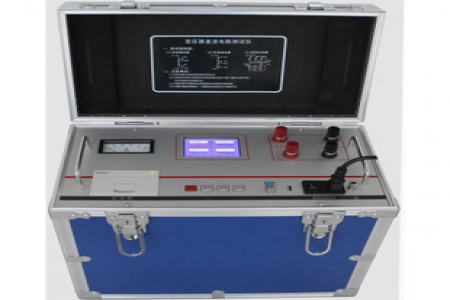
Dielectric Loss Tester: Capable of precisely measuring dielectric loss factor and capacitance values, it is a key tool for evaluating the insulation performance of power equipment.
Withstand Voltage Test Equipment: Used to apply high voltage to test the insulation strength of equipment.
Leakage Current Tester: Used to measure the leakage current of equipment and evaluate insulation condition.
Conclusion
Insulation performance evaluation of power equipment is an important link in ensuring the safe and stable operation of power systems. By regularly using professional testing tools and techniques for evaluation, insulation degradation problems can be detected and resolved in a timely manner, avoiding potential safety risks.
The above is a summary of the article about the insulation performance evaluation of power equipment such as transformers, cables, motors, and capacitors. If you need more detailed information or have specific application scenarios you would like to understand, please let me know. I would be happy to assist you.