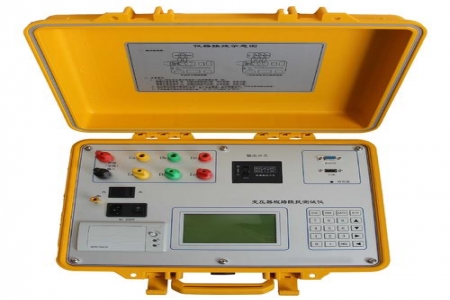


Ultrasonic Partial Discharge Detector
The ultrasonic partial discharge detector is an instrument specifically designed for detecting partial discharge phenomena in power equipment. It uses ultrasonic signals to identify and locate potential insulation defects. Below is an article overview about the ultrasonic partial discharge detector:
Ultrasonic Partial Discharge Detector
Introduction
Partial discharge detection is an important part of power system maintenance and is of great significance for preventing power equipment failures and improving system reliability. As an efficient and convenient detection method, the ultrasonic partial discharge detector plays a crucial role in the maintenance and monitoring of power equipment.
Product Overview
Name: Ultrasonic Partial Discharge Detector
Model: [Specific Model]
Manufacturer: [Manufacturer Name]
Main Features
Multi-Channel Monitoring: Capable of simultaneously monitoring multiple different test points, improving detection efficiency.
High Sensitivity: Capable of capturing weak ultrasonic signals.
Wide Frequency Band: Covers a broad ultrasonic frequency range, typically from 20kHz to 200kHz.
Portable Design: Lightweight and easy to carry, suitable for on-site operations.
Multi-Function Display: Features a high-definition color LCD screen showing detection results and parameter settings.
Built-in Storage: Can save large amounts of detection data for subsequent analysis.
Long Battery Life: Supports extended continuous operation.
Quick Localization: Helps locate discharge sources through audio indication and numerical display.
Technical Parameters
Detection Frequency: 20kHz to 200kHz
Sensitivity: ≥100dB
Dynamic Range: ≥60dB
Battery Life: ≥8 hours
Display: High-definition color LCD, resolution [specific resolution]
Dimensions and Weight: [specific dimensions]×[specific width]×[specific thickness], weight [specific weight]kg
Operating Temperature: -20°C to +50°C
Storage Temperature: -40°C to +70°C
Application Scenarios
Power Transformers: Detecting partial discharge phenomena inside transformers.
Switchgear: Including high-voltage switchgear and ring main units.
Cable Joints: Inspecting the insulation condition of cable joints and terminations.
GIS/GCB: Detecting partial discharge in gas-insulated switchgear equipment.
Motors: Evaluating the insulation condition of motors.
Instructions
Power On: Press the power button to start the device.
Setup: Adjust detection frequency, sensitivity, and other parameters.
Detection: Bring the probe close to the equipment under test and observe the screen display.
Localization: Locate the discharge source based on audio prompts and numerical display.
Data Recording: Save detection data.
Power Off: After detection is complete, long-press the power button to turn off the device.
Maintenance
Cleaning: Wipe the device surface with a soft cloth.
Storage: Store in a dry and ventilated place.
Calibration: Perform regular device calibration.
Safety Precautions
Read Before Operation: Carefully read the user manual.
Protective Measures: Wear necessary personal protective equipment.
Do Not Touch: Do not touch high-voltage equipment.
Working Principle
The working principle of the ultrasonic partial discharge detector is based on detecting ultrasonic signals generated during partial discharge. When partial discharge occurs in the insulating medium of power equipment, high-frequency pulse currents are generated. These pulse currents produce mechanical vibrations in the insulating material, which in turn generate ultrasonic signals. The ultrasonic partial discharge detector can capture these ultrasonic signals and enhance them through a series of signal processing steps (including low-noise amplification, filter amplification, and main amplification). Finally, the discharge pulses are displayed in a specific manner on the display screen, and the location and intensity of the discharge can be determined through sound indication and numerical display.
Advantage Features
Multi-Channel Monitoring: Capable of simultaneously monitoring multiple different test points, improving detection efficiency.
Digital Signal Processing: Adopting advanced digital signal processing technology to improve detection accuracy and reliability.
High Sensitivity: Capable of capturing weak partial discharge signals.
Quick Localization: Helps locate discharge sources through audio indication and numerical display.
Conclusion
The ultrasonic partial discharge detector is an important tool in power system maintenance. It helps technicians detect potential partial discharge problems early, thereby taking preventive measures to ensure the safe and stable operation of the power system.
The above is a typical article overview about the ultrasonic partial discharge detector. Specific product features and parameters may vary depending on different manufacturers and models. If you need detailed information about a particular model, please provide the specific model name or other relevant information.