Transformer Partial Discharge Tester: A Key Tool for Preventive Maintenance
Of course, below is a draft article about the transformer partial discharge tester. You can modify or supplement it according to your needs:
Transformer Partial Discharge Tester: A Key Tool for Preventive Maintenance
Introduction
Background Introduction: The importance of transformers in power systems and the challenges they face.
Partial Discharge Phenomenon: The concept of partial discharge and its hazards to power equipment.
Role of the Tester: Introduction to the important position of the transformer partial discharge tester in preventive maintenance.
Overview of Partial Discharge
Definition: Partial discharge refers to the discharge phenomenon that occurs in high-voltage electrical equipment without complete breakdown, due to factors such as insulation material defects.
Cause Analysis: Including material defects, manufacturing processes, aging, contamination, etc.
Hazards: Long-term partial discharge can lead to degradation of insulation material performance, eventually causing equipment failure or even safety accidents.
Working Principle of Transformer Partial Discharge Tester
Sensor Technology: Using capacitive coupling sensors, ultrasonic sensors, etc., to capture electromagnetic signals or acoustic waves generated by partial discharge.
Signal Processing: Processing the captured signals through built-in signal processors, including amplification and filtering.
Data Analysis: Using software to further analyze the processed signals, including but not limited to time-domain analysis, spectrum analysis, etc.
Features and Advantages of the Tester
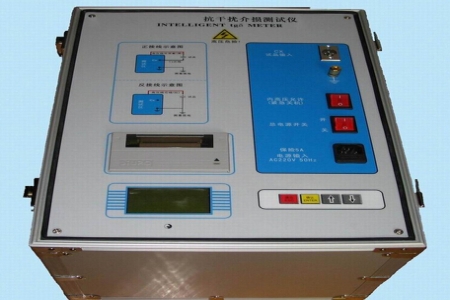
Portability: Compact size, easy to carry to the site for testing.
Easy Operation: User-friendly interface, simple operation, testing can begin without complex setup.
Real-Time Monitoring: Capable of displaying test results in real time, detecting potential partial discharge problems promptly.
Data Analysis Capability: Features powerful data analysis functions, helping to identify discharge types and locate problem sources.
Application Scenarios
Power Transformers: Monitoring partial discharge conditions in transformer windings, insulating oil, and other parts.
Cable Lines: Inspecting the insulation condition at cable joints, terminations, and other locations.
Switchgear: Evaluating the condition of insulating components within switchgear to ensure stable operation of the power system.
Testing Steps and Procedures
Preparation: Confirm the test target, select appropriate test locations, and connect sensors.
Data Acquisition: Start the tester and operate according to the instruction manual.
Data Analysis: Use supporting software to analyze the acquired data and identify partial discharge characteristics.
Result Interpretation and Recommendations: Propose maintenance or repair recommendations based on the analysis results.
Implementation Case Study
Case Background: Describe a specific partial discharge testing case.
Testing Process: Introduce in detail the process of using the transformer partial discharge tester.
Data Analysis: Display data analysis results and explain their meaning.
Conclusions and Recommendations: Summarize the application effectiveness of the tester in this case and propose improvement suggestions.
Technology Development Trends
Intelligence: With the development of artificial intelligence technology, testers are developing toward greater intelligence, such as the ability to automatically identify discharge types.
Portability: Modern testers increasingly emphasize portability and ease of use to meet on-site testing needs.
Wireless Communication: Future testers may integrate wireless communication functions for convenient remote monitoring and data transmission.
Conclusion
Emphasize the importance of the transformer partial discharge tester in power system maintenance.
Point out the importance of regular partial discharge testing for preventing equipment failures and improving power system safety.
References
List relevant technical standards, research literature, or industry guidelines as references.
This framework covers the basic information and key technical points of the transformer partial discharge tester. You can adjust and supplement it according to actual needs. We hope this article helps you better understand the transformer partial discharge tester and its application in power system maintenance.