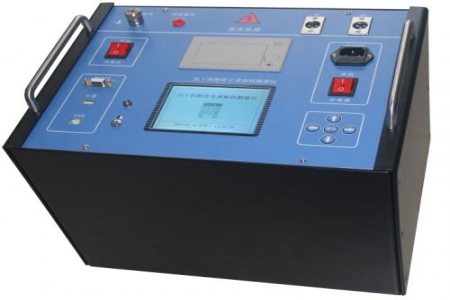


Instrument Transformer Characteristic Tester: Key Technology for Ensuring Measurement and Protection Accuracy in Power Systems
To help you write an article about the instrument transformer characteristic tester, below is a detailed outline that you can use to organize your article content.
Title
Instrument Transformer Characteristic Tester: Key Technology for Ensuring Measurement and Protection Accuracy in Power Systems
Introduction
Background Introduction: Briefly introduce the application background of the instrument transformer characteristic tester and its importance in power systems.
Importance: Emphasize the role of the instrument transformer characteristic tester in power system testing, especially its importance in improving testing efficiency and accuracy.
Fundamentals of Instrument Transformer Characteristic Tester
Definition: Explain the concept of the instrument transformer characteristic tester and its application in power systems.
Components: Introduce the main components of the instrument transformer characteristic tester, including the signal source, measurement unit, control panel, display screen, printer, etc.
Working Principle: Elaborate in detail on the working principle of the instrument transformer characteristic tester, including how to simulate voltage and current signals in power systems, precisely control output signals, and collect and analyze the response signals of instrument transformers.
Technical Specifications and Performance Indicators
Test Range: List the voltage levels and current ranges that the instrument transformer characteristic tester can handle.
Accuracy: The precision of detection and measurement provided by the testing device.
Portability: The portability of modern instrument transformer characteristic testers and their features suitable for field use.
Usage Methods and Operating Guide
Installation Preparation: Describe how to install the instrument transformer characteristic tester and prepare to connect the instrument transformer under test.
Parameter Setting: Introduce in detail how to set test voltage, current, and other parameters.
Operating Steps: List the steps for testing using the instrument transformer characteristic tester, including wiring, starting the test, obtaining data, etc.
Data Reading and Recording: Explain how to read test data and record it.
Precautions and Maintenance
Safety Precautions: Emphasize the safety matters to be noted when using the instrument transformer characteristic tester.
Maintenance: Provide daily maintenance suggestions, such as regular calibration and keeping the equipment clean.
Troubleshooting: Provide some common problems and their solutions.
Application Cases
CT Volt-Ampere Characteristic Testing: Specifically introduce how to use the instrument transformer characteristic tester to perform volt-ampere characteristic testing of current transformers.
PT Volt-Ampere Characteristic Testing: Describe the application of the instrument transformer characteristic tester in volt-ampere characteristic testing of voltage transformers.
Ratio and Polarity Testing: Provide examples of several practical application scenarios, demonstrating the performance of the instrument transformer characteristic tester in ratio and polarity testing.
Error Curve Testing: Introduce the application of the instrument transformer characteristic tester in error curve testing.
Technical Advantages and Limitations