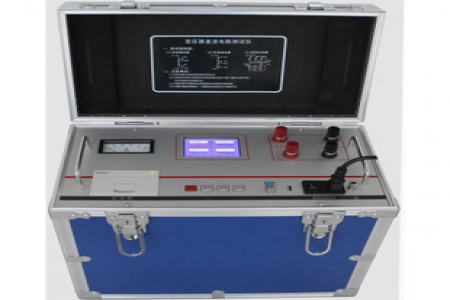


and locating partial discharge phenomena in power equipment. Partial discharge may indicate early faults in the insulation system of power equipment, so such devices play a crucial role in the maintenance and fault diagnosis of power systems. Below is an article overview about the ultrasonic partial discharge inspection locator:
Ultrasonic Partial Discharge Inspection Locator
With the increasing complexity of power equipment and technological advancement, ensuring the stability and reliability of power systems has become particularly important. Partial discharge (PD) is a significant factor leading to power equipment failures. The ultrasonic partial discharge inspection locator, as an advanced detection tool, can help technicians effectively detect and locate the position of partial discharge, thereby taking preventive measures to avoid power equipment failures.
Introduction
The working principle of the ultrasonic partial discharge inspection locator is based on the characteristics of ultrasonic waves. When partial discharge occurs, high-frequency sound waves are generated, typically above 20 kHz, beyond the hearing range of the human ear. The ultrasonic sensor in the instrument can capture these sound waves and convert them into electrical signals. Through further signal processing, they can be displayed on the screen and also monitored through headphones.
Working Principle
Equipment Features
: Capable of detecting very weak ultrasonic signals.
- High SensitivityStrong Anti-Interference
- : Capable of accurately detecting partial discharge in complex electromagnetic environments.Portability
- : Lightweight design for easy carrying, suitable for on-site inspection.Precise Location
- : Can precisely locate the discharge position through multi-point measurement.Easy Operation
- : Usually equipped with an intuitive operating interface and simple control buttons.High-Voltage Cable Terminations
Application Scenarios
- : Detecting whether partial discharge exists at cable terminations and joints.Insulators
- : Detecting whether post insulators, suspension insulators, etc., have discharge phenomena.Substation Open Equipment
- : Detecting whether corona discharge exists in outdoor substation equipment.Dry-Type Transformers
- : Inspecting dry-type transformer windings for discharge.Transformer Bushings
- : Detecting whether main transformer bushings have corona discharge.Transformer Body
- : Inspecting the main transformer body for abnormal vibration or other partial discharge phenomena.Startup Preparation
Usage Method
- : Turn on the device, wear headphones, and ensure the device is properly connected.Parameter Setting
- : Adjust the sensitivity and other relevant settings of the device as needed.Detection Process
- : Hold the device, use the laser to aim at the detection target, listen for abnormal sounds or observe waveform changes on the screen.: Record the location and intensity of abnormal signals.
- Data RecordingEstablish Inspection Cycles
- : Formulate subsequent inspection cycles based on the discharge condition of the equipment. For example, inspect equipment with low sound levels every ten days, and equipment with louder sounds once a week.: Before conducting inspections, ensure compliance with all relevant safety procedures.
Notes
- Safe Operation: Pay attention to environmental conditions during inspection, such as temperature and humidity, as these factors may affect test results.
- Environmental FactorsEquipment Calibration
- : Regularly calibrate the equipment to ensure the accuracy of test results.The ultrasonic partial discharge inspection locator is of great significance for the maintenance and fault prevention of power systems. Through regular partial discharge detection, potential problems in equipment can be discovered in a timely manner, preventing more serious accidents and thereby improving the reliability and safety of power systems.
Conclusion
The above content covers the basic information, working principle, features, application scenarios, and usage methods of the ultrasonic partial discharge inspection locator. In actual operation, please refer to the user manual of the specific equipment for detailed usage guidance.
The above content covers the basic information, working principle, features, application scenarios, and usage methods of the ultrasonic partial discharge inspection locator. In actual operation, please refer to the user manual of the specific equipment for detailed usage guidance.