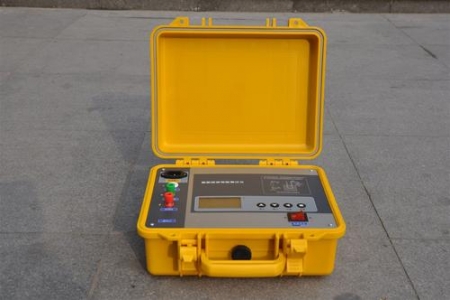

The transformer partial discharge tester is a specialized device used to detect partial discharge phenomena inside transformers. Partial discharge refers to tiny discharge phenomena occurring in the insulating medium of high-voltage electrical equipment, which may be early indicators of insulation aging or defects. Below is an article overview about transformer partial discharge testers.
Transformer Partial Discharge Tester
Overview
The transformer partial discharge tester is a key device for detecting and evaluating the insulation condition of transformers. By monitoring partial discharge activity, potential defects inside transformers, such as insulation material aging, contamination, air gaps, etc., can be detected early, allowing measures to be taken to avoid failures and ensure the safe operation of power systems.
Working Principle
The working principle of the transformer partial discharge tester is mainly based on detecting electromagnetic radiation and acoustic wave signals generated by partial discharge. When partial discharge occurs inside a transformer, it is accompanied by phenomena such as electromagnetic field changes and acoustic wave vibrations. The tester receives and analyzes these signals.
Common detection techniques include:
- Pulse Current Method: Determines the intensity and location of discharge by measuring the pulse current caused by partial discharge.
- Ultrasonic Detection: Captures acoustic wave signals generated by partial discharge using ultrasonic sensors.
- Transient Earth Voltage (TEV): Monitors earth voltage signals caused by partial discharge.
Testing Steps
- Preparation: Ensure the test environment meets requirements, such as isolating power supply and eliminating interference sources.
- Instrument Connection: Correctly connect the tester to the transformer.
- Calibration: Calibrate using a calibration pulse generator to ensure measurement accuracy.
- Test Operation: Gradually increase the test voltage until partial discharge phenomena appear, and record relevant data.
- Data Analysis: Evaluate the insulation condition of the transformer based on measurement results.
- Result Report: Prepare a test report including test conditions, result analysis, and recommended measures.
Technical Features
- Multi-Mode Detection: Capable of adopting multiple detection methods to improve detection accuracy and reliability.
- Data Analysis: Provides various discharge spectrum charts, such as time-domain waveforms, PRPD (Phase Resolved Partial Discharge), PRPS (Phase Resolved Pulse Sequence), etc., to help identify different types of partial discharge.
- User-Friendly HMI: Easy to operate, convenient for data management and result interpretation.
Application Scope
- Newly Installed Transformers: Detecting transformer insulation condition during acceptance testing
- In-Service Transformers: Regular preventive testing to monitor the operating condition of transformers.
- Fault Diagnosis: Diagnostic testing for transformers suspected of having problems.
Notes
- Safe Operation: Ensure operators understand safety procedures to avoid electric shock risks.
- Environmental Factors: Consider the impact of environmental temperature and humidity on test results.
- Interference Sources: Minimize the influence of external interference sources as much as possible.
Conclusion
The transformer partial discharge tester is an important tool for ensuring the safe operation of power systems. Through regular partial discharge testing of transformers, potential insulation problems can be detected early, necessary maintenance measures can be taken, equipment life can be extended, and failure risks can be reduced.
We hope this article provides you with basic information about transformer partial discharge testers. If you have any further questions or need more specific details, please feel free to let us know.