
☎
Service Hotline18952707000
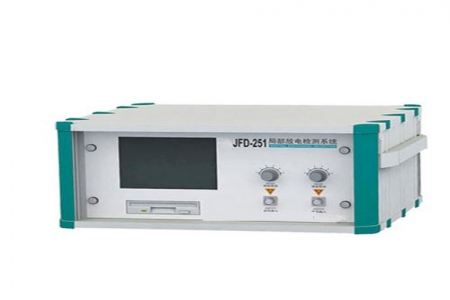
Online Partial Discharge Tester
Darui Electric recommends:
Safety Tips
1. The operation and maintenance of the partial discharge tester should be carried out by competent professional personnel. 2. The test site voltage of the partial discharge tester can be as high as tens of thousands of volts. Test personnel should strictly follow all safety precautions. The test area should have clear and visible warning signs, and everyone on site should be aware of the high-voltage area. Personnel directly involved in measurements should understand all live and high-voltage components in the measurement circuit. Personnel not directly involved in measurements should be isolated from the test area. During the test and after power is applied, no one is allowed to enter the high-voltage area.
3. Before the test, operators should be familiar with the test circuit, test method, test steps, and test purpose.
4. The test site should be tidy and clean, with no unrelated items stored. The ground in the high-voltage area should be free of scattered small metal pieces (such as bare copper wire segments, screws, nuts, and other small metal objects). The test object, step-up transformer, coupling capacitor, etc., should maintain appropriate distance from the surroundings.
5. The surfaces of the test object, step-up transformer, coupling capacitor, etc., should be kept dry and clean, as surface moisture and dirt can cause surface partial discharge, leading to abnormal measurements.
6. Test operators should connect the circuit according to regulations. All metal objects in the test area should be firmly grounded. Check and improve any possible discharge points in the test area (e.g., no sharp edges or corners). Pay special attention to ensure all ground wires are properly grounded.
7. Before starting the test and applying voltage, test personnel must thoroughly and comprehensively check the circuit to avoid wiring errors. Special attention should be paid to ensure that ground wires, high-voltage wires, and power circuit connections are firmly connected.
8. If an abnormality occurs during the test, first cut off the power supply, then proceed with further handling.
(IV) Precautions
1. Before starting the test and applying voltage, test personnel must thoroughly and comprehensively check the circuit to avoid wiring errors. Ensure that the ground wire at the test instrument is firmly connected to the grounding body. If the connection is not firm or the wire is accidentally kicked and broken during preparation, it may cause personal injury and equipment damage.
2. For connecting wires, avoid exposing sharp tips to prevent corona discharge. Especially for partial discharge tests at higher voltage levels, it may be necessary to use thicker high-voltage connecting wires and install anti-corona shields to reduce corona discharge caused by high field strength. The shield should not contact the porcelain skirt of the test object.
3. Generally, during the test, the partial discharge level of the test object during withstand voltage and pre-boost is much higher than the normal value. At this time, the instrument's meter will inevitably exceed full scale. To prevent instrument damage, turn the coarse gain adjustment knob counterclockwise by one or more steps to keep the reading within full scale. When the voltage drops to the measurement voltage, turn the coarse gain switch clockwise by one or more steps to record the measurement value.
Partial Discharge Tester
[Including mechanical fault detection in electrical equipment and gas/liquid leak detection]
I. GIS Switch Drive Mechanism Fault Finding to Prevent Switch Refusal and Maloperation
GIS is the most important switching equipment in modern power systems. Whether the switches inside GIS operate correctly is a key factor for the safe operation of the power grid. High-voltage GIS switches are mostly driven by hydraulic pressure or compressed air. To ensure the normal operation of the hydraulic and pneumatic drive systems, the motor must be started periodically to apply pressure and verify system reliability. However, due to defects caused by manufacturing processes, installation, or improper maintenance, or even compressor damage, incidents of reduced drive speed or failure are increasing, seriously threatening the stable operation of the power grid and directly affecting people's lives and production, with severe social consequences. The SDT Electrical Equipment Partial Discharge Patrol Tester, using advanced ultrasonic principles and sophisticated sensing technology, can effectively detect internal leaks in hydraulic and pneumatic systems, identify drive faults in advance, and notify maintenance personnel via digital and audible signals to eliminate defects, ensuring the safe operation of GIS.
II. Insulator Pollution Flashover and Internal Crack Detection, Cable Joint Partial Discharge Detection
Various types of insulator internal cracks and external pollution faults urgently require effective detection methods. When the air around an insulator is ionized, chemical reactions occur, corroding metal parts and weakening the insulation. The high energy from corona discharge can cause severe damage to mechanical components, leading to unplanned outages and affecting thousands of customers, and in severe cases, fire and explosion. Especially in factories, fires and explosions caused by electrical partial discharge can have serious chain reactions due to the presence of hazardous and toxic chemicals. Traditional infrared imaging technology can detect hot spots invisible to the naked eye. However, partial discharge, corona, arcing, and tracking do not always cause significant temperature rise, and high ambient temperatures can mask these phenomena. However, these phenomena generate ultrasonic noise, which can be accurately detected using ultrasonic detection equipment.
III. GIS/GCB and Switchgear, Power Distribution Cabinet, Communication Cabinet Internal Partial Discharge Fault Detection
Internal partial discharge faults in GIS/GCB and switchgear in power plants and substations are increasing, requiring appropriate detection methods for predictive maintenance and alarm. The SDT Electrical Equipment Partial Discharge Patrol Tester is timely. The insulation medium of GIS/GCB varies, affecting the propagation speed of internal and external partial discharge. Traditional methods such as chromatography or electrical measurement are cumbersome, dangerous, expensive, and cannot perform real-time detection. Electrical maintenance personnel urgently need a simple, reasonably priced, and safe detection method for spring and autumn inspections and routine predictive maintenance. The SDT Electrical Equipment Partial Discharge Patrol Tester fully meets these needs.
IV. Partial Discharge Detection of Transformers, Bushing Bushings, CT/PT, Capacitors, and Reactors
The SDT Electrical Equipment Partial Discharge Patrol Tester overcomes the limitation of infrared technology, which can only measure surface thermal faults and cannot detect internal faults and their causes, making it the best choice for electrical maintenance personnel worldwide. Transformers, bushing bushings, CT/PT, capacitors, and reactors in substations, due to problems during manufacturing, transportation, and installation, are increasingly experiencing internal partial discharge and even accidents, urgently requiring appropriate detection methods. Ultrasonic detection in high-voltage systems compensates for the shortcomings of thermal imaging technology. Currently, the SDT Electrical Equipment Partial Discharge Patrol Tester has become the best choice for electrical maintenance personnel worldwide. Electrical faults generate ultrasound at the fault point. By scanning an area for leaks, various characteristic sounds such as frying, popping, and humming can be associated with different faults. Recording these sounds establishes a fault database, which can be shared with the dispatch system or MIS network.
V. SF6 Gas Leak Detection
Suitable for locating leaks in SF6 transformers, switches, and circuit breakers in substations and power plants, ensuring the safe operation of SF6 equipment.