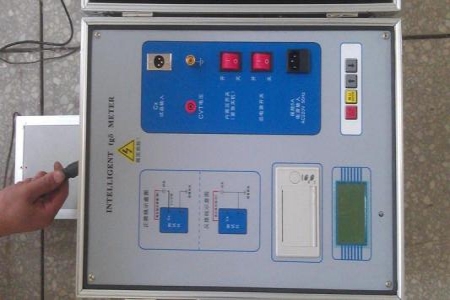
The high-voltage wireless phase detector is an instrument specifically for detecting whether voltage phases at different locations in power systems are consistent
It plays a crucial role in the installation, commissioning, and maintenance of power systems, ensuring the safe and stable operation of power grids. Through wireless communication technology, this device can complete phase comparison tasks without direct physical connection, greatly improving operational safety and efficiency.
Main Applications
Pre-Commissioning Inspection of New Power Lines: Ensures that newly laid cables or overhead lines correctly match the phase sequence of the existing grid.
Power System Maintenance and Repair: After maintaining or repairing power facilities, uses high-voltage wireless phase detectors to verify that the phase of repaired lines is accurate.
Troubleshooting: When power outages or other abnormal conditions occur, can be used to quickly locate the source of the problem and determine if it is caused by phase mismatch.
Working Principle
A High-Voltage Wireless Phase Tester typically consists of two parts: a transmitter and a receiver. Transmitters are installed at two ends or multiple points of the power line under test, where they collect voltage signals at those locations and convert them into digital signals, then wirelessly transmit them to the receiver. The receiver analyzes and processes the received data to determine the phase relationship between each point. If the phases at both locations are the same, the phase sequence is correct; otherwise, further adjustment is required.
The operating frequency of wireless phase detectors is generally selected in license-free bands (such as the 2.4GHz ISM band) to avoid interfering with other communication devices and ensure sufficient transmission distance and penetration.
Features and Advantages
High Safety: Uses non-contact measurement methods, so operators do not need to directly contact live parts, greatly reducing the risk of electric shock.
Easy Operation: Most models are equipped with intuitive operating interfaces and graphical displays, making them easy to understand and operate.
Efficient and Convenient: Enables long-distance phase comparison without wiring, suitable for rapid on-site deployment.
Strong Adaptability: Can adapt to different environmental conditions, including severe weather, with good waterproof and dustproof performance.
Data Recording and Analysis: Some advanced models support automatic recording and export of test data, facilitating subsequent analysis and report generation.
Selection Guide
When selecting a suitable high-voltage wireless phase detector, the following aspects should be considered:
Applicable Voltage Level: Select the corresponding phase detector based on the voltage level of power lines in the actual working environment.
Measurement Accuracy: For applications with higher accuracy requirements, select products with higher resolution and smaller error margins.
Transmission Distance: Considering spatial constraints in actual applications, select an appropriate wireless transmission range.
Additional Features: For example, whether functions such as Bluetooth connectivity and mobile app support meet your needs.
With the advancement of technology, the design of High-Voltage Wireless Phase Testers is continuously improving, aiming to provide more intelligent, reliable, and user-friendly solutions. This not only enhances work efficiency but also provides strong support for ensuring the safe and stable operation of power systems. I hope this brief article provides you with a basic understanding of High-Voltage Wireless Phase Testers. If you have more specific questions or need further information, please feel free to ask!