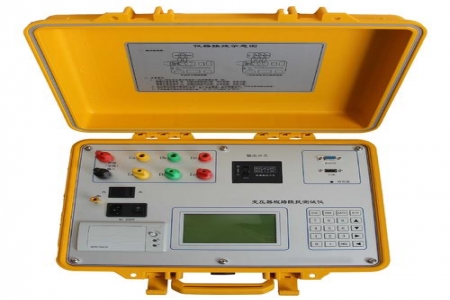

The Transformer Ratio Tester is a device used for measuring the voltage ratio between the primary and secondary windings of a transformer
(i.e., the ratio). This testing is very important for ensuring normal transformer operation, verifying design parameters, and diagnosing potential faults. Below is an article overview about Transformer Ratio Testers, including their working principles, types, and applications
Transformer Ratio Tester Overview
Working Principle
Basic Concept: The Transformer Ratio Tester applies a known voltage to the primary winding of the transformer and measures the voltage generated on the secondary winding to calculate the ratio. The ratio is the proportional relationship between the primary and secondary voltages of the transformer.
Measurement Method: Modern ratio testers typically use high-precision voltage sources and current sensors for accurate measurement. Some advanced models also feature automatic range switching to accommodate transformers of different sizes.
Types
Manual Type: Requires the operator to manually set test parameters and read results, suitable for simple testing needs.
Automatic Type: Built-in microprocessor that can automatically complete the entire testing process, including data acquisition, processing, and result display, suitable for complex or frequent testing tasks.
Portable Type: Compact in size, easy to carry for on-site testing, ideal for power maintenance personnel.
Laboratory Grade: Offers higher measurement accuracy and additional features such as temperature compensation and data recording, suitable for research institutions or large enterprises.
Application Areas
Power System Maintenance: Regularly inspect transformer performance to ensure stable grid operation.
Manufacturing and Quality Control: Perform factory inspection of newly manufactured transformers during the production process.
Fault Diagnosis: When a transformer shows abnormalities, the ratio test can help locate the problem.
Scientific Research: Used for studying new transformer materials and technologies, optimizing design parameters.
Advantages
High Accuracy: Modern ratio testers use advanced sensing technology and algorithms to provide very accurate measurement results.
Easy Operation: Many models are equipped with user-friendly interfaces and automatic calibration functions, simplifying the operation process.
Versatility: In addition to basic ratio measurement, some advanced devices can also simultaneously measure winding resistance, polarity detection, etc.
Good Safety: Features overvoltage protection mechanisms to ensure user safety.
Usage Precautions
Correct Wiring: Connect all lines strictly according to the manual instructions to avoid short circuits or open circuits.
Environmental Conditions: Keep the testing environment dry and clean, away from strong magnetic field interference.
Temperature Effects: Pay attention to the potential impact of temperature changes on test results, and take constant temperature measures if necessary.
Regular Calibration: To ensure data accuracy, regularly return the instrument to the manufacturer or professional organization for calibration.
Follow Safety Standards: When working in high-voltage environments, appropriate safety protection measures must be taken, such as wearing insulating gloves and boots.
Conclusion
The Transformer Ratio Tester is one of the indispensable tools in the power industry, playing a key role in ensuring normal transformer operation and improving power system reliability. With technological advancement, future ratio testers will become more intelligent and portable, providing users with more efficient and convenient services. Properly selecting the right tester and mastering the correct usage methods are crucial for obtaining reliable test results.
I hope this article provides you with a comprehensive understanding of the basic knowledge and importance of Transformer Ratio Testers. If you have any specific questions or want to learn more details, please feel free to let us know!