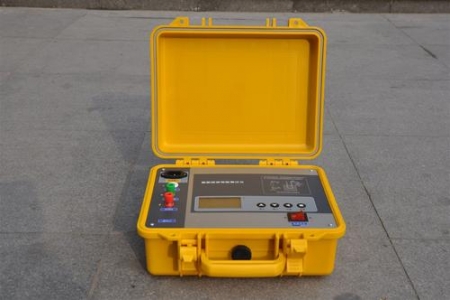


The Transformer Ratio Tester is a specialized instrument designed for measuring the winding voltage ratio of power transformers.
It can accurately determine the voltage ratio between transformer windings, which is essential for ensuring proper transformer operation and maintenance. This article provides a detailed introduction to the working principle, classification, application areas, and usage precautions of Transformer Ratio Testers.
Working Principle
The basic working principle of a Transformer Ratio Tester is to apply a known voltage to one side of the transformer (usually the high-voltage side), then measure the output voltage on the other side (low-voltage side) to calculate the transformer turns ratio. The main steps are as follows:
Signal Generation: The tester generates a stable AC voltage signal.
Signal Output: The voltage signal is applied to one side of the transformer (usually the high-voltage side).
Signal Acquisition: High-precision measuring instruments simultaneously capture voltage signals from both sides of the transformer.
Data Processing: The transformer turns ratio is calculated based on the collected data.
Result Display: The calculation results are displayed in numerical or graphical form for easy viewing and recording.
Classification
Manual Ratio Tester
Suitable for simple ratio testing, typically requiring manual adjustment of input voltage and reading of output voltage.
Simple operation with relatively low cost.
Automatic Ratio Tester
Equipped with an automatic control system that can automatically adjust input voltage and read output voltage.
The testing process is more precise and efficient, suitable for complex testing requirements.
Portable Ratio Tester
Compact design with lightweight construction, easy to carry and use on-site.
Suitable for field operations and temporary testing.
Multi-Function Ratio Tester
In addition to ratio testing, it integrates other functions such as short-circuit impedance testing and no-load loss testing.
Suitable for various application scenarios, providing comprehensive testing solutions.
Application Areas
Power Industry: Used for transformer ratio testing in power systems to ensure proper transformer operation.
Manufacturing: Used for transformer ratio testing of electrical equipment within factories to ensure product quality.
Research Institutions: Used for transformer performance research and new technology development, verifying the performance of new designs.
Education and Training: Used for teaching and training in electrical engineering programs, helping students understand transformer working principles and testing methods.
Laboratories: Used for transformer performance testing and research, providing accurate test data.
Advantages
High Precision: Utilizes high-precision measuring instruments and advanced data processing technology to ensure the accuracy of test results.
Multi-Function: Some models integrate multiple testing functions, enabling comprehensive evaluation of transformer performance.
Automation: Some models feature automatic control systems, enabling automated testing and improving test efficiency.
Portability: Some models feature compact designs, making them easy to carry and use on-site.
Ease of Use: User-friendly interface with simple operation, suitable for field use.
Data Management: Supports data recording and analysis for easy management and archiving.
Usage Precautions
Safety Protection: During testing, always follow safety operating procedures, wear necessary protective equipment, and ensure personal safety.
Equipment Inspection: Before use, check the integrity and functionality of the Transformer Ratio Tester to ensure there is no damage or malfunction.
Proper Connection: Ensure the tester is correctly connected to the transformer under test to avoid short circuits or open circuits.
Environmental Adaptation: Pay attention to the operating environment of the tester, avoiding adverse conditions such as high temperature and humidity that may affect test results.
Professional Training: Operators should receive professional training and be familiar with the tester operation methods and precautions.
Periodic Calibration: To ensure test result accuracy, it is recommended to periodically calibrate and maintain the Transformer Ratio Tester.
Conclusion
The Transformer Ratio Tester is an essential tool for ensuring transformer performance and reliability. Through its advanced testing technology and multiple functions, it can accurately measure transformer turns ratio, ensuring safety and stability in actual operation. Properly selecting and using a Transformer Ratio Tester not only improves system safety and reliability but also effectively reduces failure rates and ensures the normal operation of electrical equipment. We hope this article has been helpful for your understanding and use of Transformer Ratio Testers.