High-Voltage Wireless Phase Detector: A Key Tool for Ensuring Power System Synchronization and Safety
In the construction and maintenance of power systems, ensuring phase consistency between different lines or equipment is critically important. As an advanced detection device, the High-Voltage Wireless Phase Detector helps technicians accurately perform phase comparison without contacting high-voltage lines, thereby ensuring synchronized operation and safe operation of the power system.
II. Definition and Functions of High-Voltage Wireless Phase Detectors
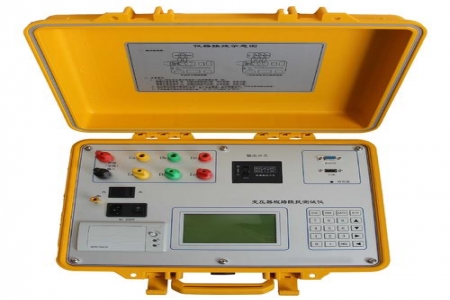
The High-Voltage Wireless Phase Detector is an instrument used for detecting phase differences between different lines in high-voltage power systems. It utilizes wireless technology for long-distance signal transmission and can complete phase comparison without physical contact, greatly improving operational safety and convenience.
The main functions include:
Phase Comparison: Detects phase angle differences between two or more lines to ensure they are on the same phase.
Frequency Measurement: Measures the frequency of the power system to ensure frequency consistency.
Phase Sequence Detection: Determines whether the phase sequence in the power system is correct, i.e., whether the order of Phase A, Phase B, and Phase C complies with standards.
Remote Monitoring: Through wireless technology, phase comparison can be performed at a safe distance, avoiding direct contact with high-voltage lines.
III. Application Scenarios of High-Voltage Wireless Phase Detectors
High-Voltage Wireless Phase Detectors are widely used in various aspects of power systems, including but not limited to:
New Substation Construction or Expansion Projects: Ensuring phase consistency between new equipment and existing systems before connecting to the grid.
Grid Maintenance and Repair: Using phase detectors to check phase consistency during line switching or equipment maintenance to prevent short-circuit accidents caused by phase errors.
Power Engineering Acceptance: After project completion, using phase detectors for phase verification to ensure engineering quality meets standards.
Emergency Repair: Quickly verifying phases during fault emergencies to improve repair efficiency.
IV. Key Points for Operation and Use
When using a High-Voltage Wireless Phase Detector, the following steps should be followed:
Preparation: Ensure the instrument and its accessories are intact and the battery is fully charged.
Parameter Setting: Set test parameters according to actual conditions, such as frequency range.
Connecting Probes: Place the test probes on the lines or equipment that need phase verification.
Reading Data: Start the instrument, read the displayed phase information, and record it.
Analyzing Results: Determine phase consistency based on data such as phase angle and frequency provided by the instrument.
V. Selection and Maintenance Recommendations
When selecting a High-Voltage Wireless Phase Detector, the following points should be noted:
Accuracy and Reliability: Choose products with high accuracy and reliability to ensure accurate test results.
Applicable Range: Consider the applicable voltage level of the instrument to ensure it is suitable for the specific working environment.
Ease of Operation: Choose equipment with a user-friendly interface that is easy to use.
After-Sales Service: Choose brands that provide good after-sales service and technical support.
VI. Future Outlook
With technological advancements, future High-Voltage Wireless Phase Detectors will become more intelligent and integrated. For example:
Intelligent Diagnosis: Combining AI technology to automatically identify phase errors and provide solutions.
Remote Operation: Remotely controlling instruments via mobile devices to improve work efficiency.
Data Sharing: Uploading test data to the cloud for multi-department and multi-location information sharing.
Multi-Function Integration: Integrating phase detection with other testing functions in a single device to simplify operation procedures.
By properly using High-Voltage Wireless Phase Detectors, power enterprises can effectively improve the synchronization and safety of power systems, ensure stable grid operation, and provide more reliable power services to users.