
Transformer Ratio Tester: Principle, Applications and Development Trends
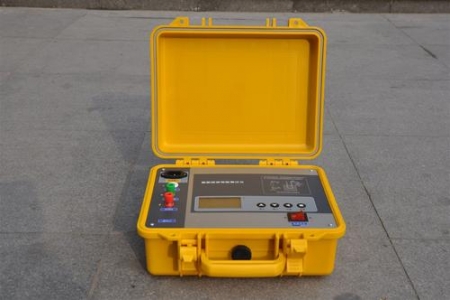
The transformer is one of the core devices in power systems, and its performance directly affects the efficiency and quality of power transmission. The Transformer Ratio Tester, as a professional detection tool, helps technicians accurately measure the turns ratio of transformers to ensure they meet design requirements. This article will detail the working principle, application scenarios, and future development direction of Transformer Ratio Testers.
Working Principle
The working principle of the Transformer Ratio Tester is based on the fundamental characteristic of transformers——voltage is proportional to the number of turns. When a known voltage is applied to one side of the transformer, the ratio of the voltage on the other side to the applied voltage is the transformer ratio. The tester measures the ratio through the following steps:
Apply Excitation Voltage: The tester applies a known voltage to one side of the transformer (typically the primary winding).
Measure Response Voltage: Measure the voltage on the other side of the transformer (typically the secondary winding) using precise voltage sensors.
Calculate Ratio: Calculate the transformer ratio based on the measured voltage values.
Compare with Standard Values: Compare the calculated ratio with standard values or factory data to determine whether the transformer is in normal condition.
Application Scenarios
The Transformer Ratio Tester is widely used in multiple stages of power systems:
New Transformer Acceptance: Before installing a transformer, use the tester to verify that its ratio meets design requirements.
Regular Inspection and Maintenance: Periodically perform ratio tests on operating transformers to promptly detect potential issues.
Fault Diagnosis: When a transformer shows abnormal conditions, the tester can quickly locate the problem, such as inter-turn short circuits.
Scientific Research and Teaching: Used in electrical engineering education and research to demonstrate transformer working principles and fault analysis.
Development Trends
With the continuous development of power technology, Transformer Ratio Testers are also making constant progress and improvements:
High Precision Measurement: Using advanced measurement technologies and algorithms to improve measurement accuracy and reduce human error.
Intelligent Control: Integrating microprocessors and software systems for automated measurement, data storage, and analysis functions.
Multi-Function Integration: In addition to ratio measurement, capable of performing other types of tests such as short-circuit impedance and DC resistance.
Portable Design: Developing smaller and lighter portable devices for convenient on-site operation.
Wireless Communication: Supporting wireless data transmission for remote monitoring and data analysis.
Conclusion
As an important tool in power system maintenance and repair, the Transformer Ratio Tester is crucial for ensuring the reliable operation of power equipment. With continuous technological advancement, future Transformer Ratio Testers will be more efficient and intelligent, providing strong support for the healthy development of the power industry.
I hope this article helps you better understand the working principle of Transformer Ratio Testers and their applications in power systems. If you have any specific questions or need further information, please feel free to let us know.