Three-Channel Partial Discharge Tester: Principle, Usage and Applications
Of course. Below is an article overview about the Three-Channel Partial Discharge Tester, covering the basic concepts, working principles, usage methods, and application areas of this instrument.
Three-Channel Partial Discharge Tester: Principle, Usage and Applications
Introduction
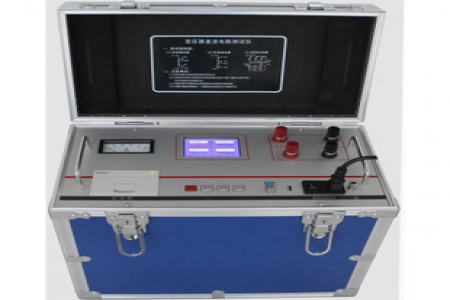
The Three-Channel Partial Discharge Tester is a professional instrument used for detecting and measuring partial discharge activity inside power equipment. It can evaluate the insulation condition of power equipment without interrupting equipment operation, helping to detect potential insulation defects early and thereby avoiding serious power failures.
Working Principle
The working principle of the Three-Channel Partial Discharge Tester is based on capturing and analyzing the pulse signals generated by partial discharge inside power equipment. When partial discharge occurs in the insulation system of power equipment, brief pulse currents are generated, which can be captured by sensors and sent to the tester for further analysis.
The specific steps are as follows:
Signal Acquisition: Simultaneously collect partial discharge signals through three independent channels.
Signal Processing: Amplify, filter, and analyze the collected signals to identify and quantify the degree of partial discharge.
Result Display: Display the characteristic parameters of partial discharge on the screen, such as discharge intensity, discharge count, and phase distribution charts.
Main Functions
The main functions of the Three-Channel Partial Discharge Tester include:
Multi-Channel Synchronous Detection: Capable of simultaneously collecting three independent partial discharge signals for multi-angle analysis.
High Sensitivity: Can detect very weak partial discharge signals.
Multiple Display Modes: Supports different display modes, such as elliptical scan, phase spectrum, and frequency spectrum analysis.
Strong Anti-Interference Capability: Uses advanced anti-interference technology to ensure accurate measurement even in complex electromagnetic environments.
Usage Method
Preparation:
Ensure the tester is in good working condition.
Prepare all necessary sensors and accessories.
Instrument Configuration:
Select appropriate sensors based on the type and voltage level of the power equipment under test.
Set relevant parameters of the tester, such as sensitivity and frequency range.
On-Site Testing:
Connect sensors to the equipment under test.
Start the tester and begin collecting data.
Observe the results on the display and adjust settings as needed.
Data Analysis:
Analyze the collected data to determine whether partial discharge problems exist.
Record and report test results.
Precautions
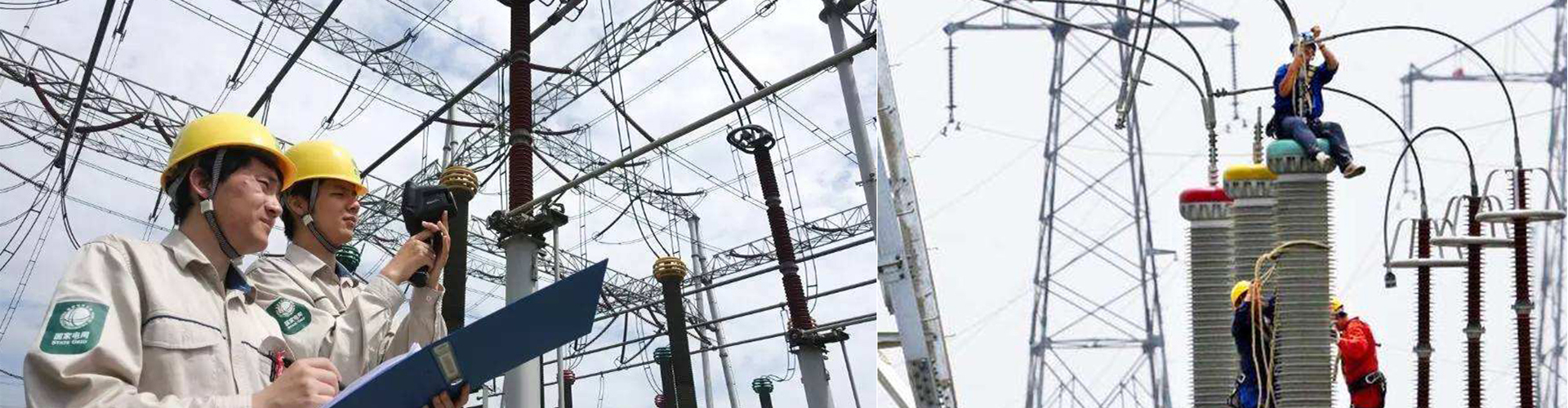
Ensure operators wear appropriate personal protective equipment.
Maintain a safe distance from high-voltage equipment during testing.
Confirm the working condition and parameter settings of the instrument before testing.
Application Areas
The Three-Channel Partial Discharge Tester is widely used in multiple areas of power systems, including but not limited to:
Transformers: For partial discharge detection and evaluation of transformers.
Instrument Transformers: For partial discharge detection of voltage transformers and current transformers.
High-Voltage Switchgear: For partial discharge detection of high-voltage circuit breakers and other switchgear.
Power Cables: For partial discharge detection of power cables.
Other High-Voltage Apparatus: Such as capacitors, bushings, surge arresters, etc.
Conclusion
The Three-Channel Partial Discharge Tester plays an important role in partial discharge detection in power systems due to its high efficiency, precision, and versatility. Through proper use of this instrument, the safety and reliability of power equipment can be effectively improved.
If you need more detailed information or content on other aspects, please feel free to let us know.