
Portable Partial Discharge Detectors Are Used for Testing High-Voltage Electrical Equipment
An important tool for detecting partial discharge phenomena in high-voltage electrical equipment. Partial discharge refers to the phenomenon where gas in certain areas is ionized due to excessive electric field strength in the insulation material of high-voltage equipment. This phenomenon typically occurs at defects in solid insulation materials or in air gaps, and may be an early sign of insulation system failure. The following is an article overview about Portable Partial Discharge Detectors:
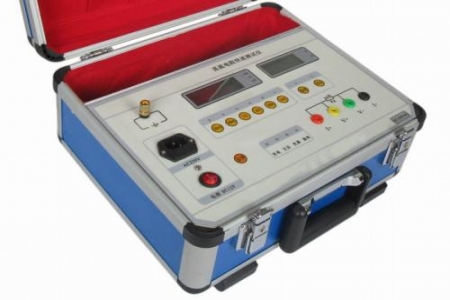
Portable Partial Discharge Detector
Introduction
With the continuous increase in power system capacity and higher requirements for power equipment reliability, Partial Discharge (PD) detection has become an important component of preventive maintenance. Portable PD detectors play a key role in power system maintenance and fault diagnosis due to their portability and flexibility.
Working Principle
The working principle of portable PD detectors is mainly based on detecting electromagnetic waves, acoustic waves, or photon signals generated by partial discharge. Different forms of energy are released during the partial discharge process, for example:
Electromagnetic Waves: Partial discharge generates high-frequency electromagnetic waves that can be captured by UHF (Ultra High Frequency) sensors.
Acoustic Waves: Partial discharge may also generate ultrasonic signals that can be detected by ultrasonic sensors.
Photon Signals: In some cases, partial discharge also produces visible light or infrared radiation, which can be captured by infrared cameras.
Features
High Sensitivity: Capable of detecting very weak partial discharge signals.
Anti-Interference Capability: Able to accurately detect partial discharge in complex electromagnetic environments.
Portability: Lightweight design for easy carrying, suitable for on-site testing.
Multi-Functionality: Equipped with various sensors suitable for different testing scenarios.
Application Areas
Portable PD detectors are widely used in various aspects of power systems, including but not limited to:
High-Voltage Switchgear: Detects insulation issues inside switchgear cabinets.
Ring Main Units: Ensures grid stability.
Transformers: Checks the insulation condition of oil-immersed and dry-type transformers.
Cables: Evaluates the health condition of cable terminations and joints.
GIS (Gas-Insulated Switchgear): Monitors partial discharge activity inside GIS.
Operating Steps
Startup Preparation: Turn on the instrument and set it to the appropriate detection mode.
Calibration: Use a calibration pulse generator to calibrate the instrument to ensure the accuracy of detection results.
Connecting Sensors: Select appropriate sensors based on the detection target and connect them.
Detection: Hold the instrument close to the equipment under test, moving at a low, constant speed to cover all possible discharge locations.
Data Analysis: Record the detected data and analyze it through built-in software to determine the degree and location of partial discharge.
Report Generation: Generate detailed detection reports based on analysis results.
Notes
Safety First: Before conducting testing, ensure compliance with all safety regulations.
Proper Connection: Ensure all connections are correct to avoid affecting detection results.
Environmental Factors: Pay attention to environmental conditions during testing, such as humidity and temperature, as these factors may affect detection results.
Conclusion
Portable PD detectors are of great significance for power system maintenance and fault prevention. Through regular partial discharge testing, potential problems in equipment can be detected in a timely manner, avoiding more serious accidents and thereby improving the reliability and safety of power systems.
The above content summarizes the basic information, working principles, features, application areas, and operating steps of Portable Partial Discharge Detectors. In actual operation, it is recommended to refer to the user manual of the specific equipment for detailed usage instructions.