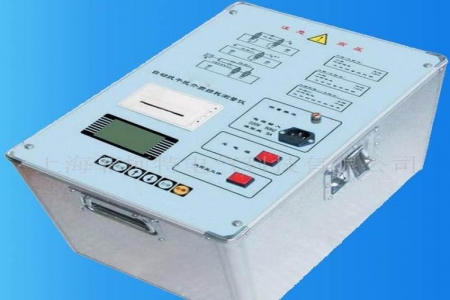
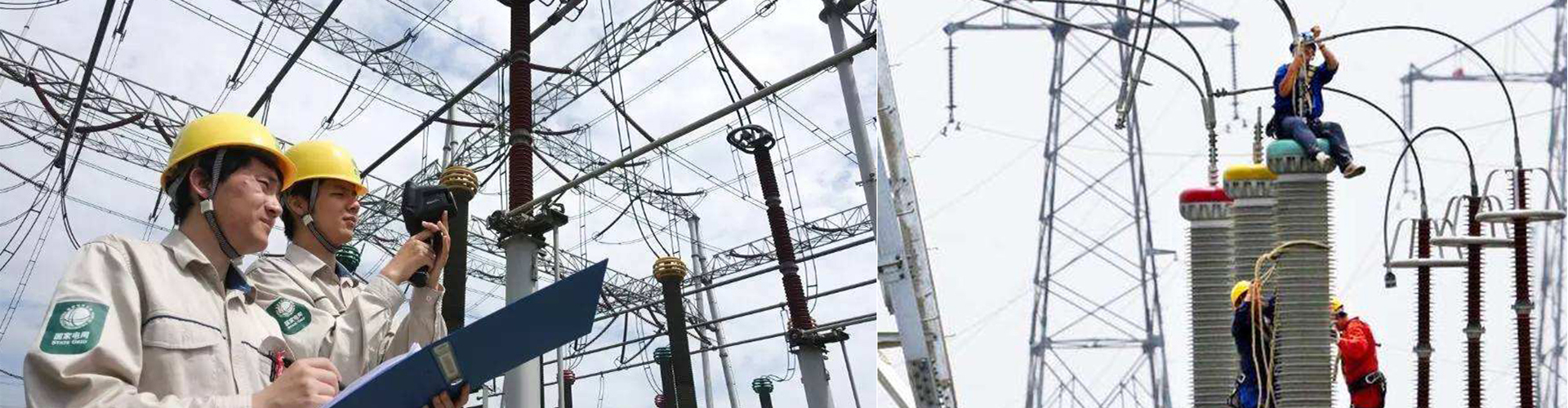
High-Voltage Wireless Phase Detectors Are Used in Power Systems to Detect Whether Two Lines
The High-Voltage Wireless Phase Detector is a key safety tool used in power systems to detect whether the phase relationship between two lines, transformers, or busbars is consistent. In power grid operation and maintenance in 2026, it has evolved from the traditional approach of listening to sounds and watching lights to fully digital,
Given the current date of March 19, 2026, the following is a detailed analysis based on the latest technical standards and application scenarios:
1. Core Functions and Application Scenarios
Preventing Phase-to-Phase Short Circuits: Before parallel operation (loop closing) of two power sources, the three-phase sequence (A-A, B-B, C-C) must be confirmed to correspond exactly. If phases are incorrect and the switch is closed directly, a catastrophic phase-to-phase short circuit explosion will occur.
Post-Maintenance Acceptance: After line overhauls, cable replacements, or transformer wiring adjustments, verify the phase sequence is correct.
New Station Commissioning: A mandatory testing step before connecting new substations or distribution rooms to the power grid.
Applicable Voltage Levels: Covers the full voltage range from low voltage 400V to UHV 1000kV (achieved by replacing acquisition rods or sensors for different voltage levels).
2. Working Principle and Technological Evolution
Modern wireless phase detectors no longer rely on physical wire connections between two test points but instead use high-precision wireless synchronization technology:
Traditional Principle (Basic)
Electric Field Induction: Two independent collectors (X and Y units) respectively contact or approach the high-voltage line under test to sense voltage signals.
Signal Transmission: Early products transmit signals back to the host via 315MHz/433MHz radio waves, and the host compares the phase difference between the two signals.
2026 New Technical Features
BeiDou/GPS Dual-Mode Timing Synchronization:
This is the biggest technological leap. Collectors no longer rely solely on analog radio transmission of waveforms but instead have built-in BeiDou Gen 3 or GPS high-precision timing modules.
The two collectors independently record the timestamp of the voltage waveform, and the host calculates the phase difference by comparing timestamps through algorithms. This makes the phase detection distance no longer limited by radio transmission range, enabling cross-substation and cross-kilometer phase detection.
Anti-Interference and Encrypted Communication:
Using LoRa or proprietary spread spectrum communication protocols with stronger penetration, capable of stable operation in complex electromagnetic environments (such as dense cable trenches, metal-shielded rooms).
Data transmission is AES-256 encrypted to prevent malicious interference or forgery of signals, ensuring operational safety.
Intelligent Identification and Error Prevention:
Automatic Voltage Level Identification: The sensor automatically identifies the current voltage level (e.g., 10kV or 110kV) and prompts the operator with the safe distance to maintain.
Voice and AR Assistance: Some high-end models support connection with explosion-proof tablets or AR glasses, directly displaying the phase vector diagram in the field of view with clear voice announcements of same phase or different phase.
Self-Test and Safety Certification:
Automatic functional self-test on startup (battery, sensor sensitivity, communication link).
Features an electronic fence function: when the operator gets too close to live equipment (less than the safe distance), the device emits a strong audible and visual alarm.
3. Main Classifications
Based on mainstream products in the 2026 market, they are mainly classified into the following categories:
Table
Type Features Application Scenarios
Contact-Type Wireless Phase Detector The collector front end has a metal hook and requires direct contact with the conductor. Highest precision and strongest anti-interference. Exposed busbars, overhead lines, switchgear contacts.
Non-Contact Type (Inductive) No need to contact the conductor; approaching the insulation layer is sufficient to induce the electric field. Highest safety and most convenient operation. Insulated cables, enclosed bus ducts, adjacent lines that cannot be de-energized.
Remote Wide-Area Phase Detection System Based on satellite timing, two hosts can be several kilometers or even tens of kilometers apart. Phase detection at both ends of long-distance transmission lines, phase detection of tie lines between two different substations.
Smart Wearable Phase Detection Kit Miniaturized collectors used with handheld terminals or smart watches. Operation in confined spaces, reducing burden during high-altitude work.
4. Key Performance Indicators (2026 Standard)
Measurement Accuracy: Phase angle error ≤ ±3° (even reaching ±1°).
Phase Detection Distance:
Conventional wireless distance: ≥ 150 meters (open area).
Wide-area synchronous distance: Unlimited (as long as there is satellite signal).
Voltage Level: Adaptive or segmented coverage from 0.4kV ~ 1000kV.
Battery Life: Lithium battery powered, continuous operation time ≥ 10 hours, supports fast charging.
Protection Rating: IP67 and above (dustproof and waterproof), drop-resistant, adaptable to extreme environments from -30°C to +60°C.
Data Storage: Automatically stores test records (time, location, phase result, operator ID), supports USB/Bluetooth export, compliant with power safety production traceability system requirements.
5. Operating Procedure Summary
Self-Test: Turn on the host and collectors, confirm sufficient battery power, normal communication, and self-test passed.
Voltage Verification: First test the phase detector on a known energized object to confirm the equipment functions correctly (live indication is correct).
Acquisition:
Operator A holds the X collector to contact/approach phase A of the line.
Operator B holds the Y collector to contact/approach phase B of the line (or the corresponding phase of another line).
Note: New 2026 models are often operated by a single person, measuring sequentially and automatically comparing historical data.
Reading:
Same Phase: The host displays a phase difference close to 0° (or 360°), voice announces same phase, indicator light is typically green.
Different Phase: The host displays a phase difference close to 120° or 240°, voice announces different phase, indicator light is red.
Recording: Save the test results and generate an electronic report for upload to the O&M management system.
6. Safety Precautions (Critical)
Insulation Inspection: Before use, strictly check the validity period and surface condition of the insulating rod. Never use a damp or cracked insulating rod.
Safety Distance: Strictly comply with the minimum safety distances specified in safety regulations for different voltage levels. Even non-contact types must not arbitrarily reduce the distance.
Weather Restrictions: Outdoor high-voltage phase detection is strictly prohibited during thunderstorms, heavy fog, or extremely high humidity (>85%).
Two-Person Verification: Despite the high level of device intelligence, important operations are still recommended to follow the one person operates, one person supervises system.
Fall Prevention: When used at height, the collectors and insulating rods must be secured with fall prevention ropes.
7. 2026 Mainstream Brand Reference
Common brands in the market include domestic brands such as Wuhan Kaidi Zhengda (KD), Shanghai SUTE Electric (SUTE), Baoding Tianwei, as well as international brands such as Megger (SMG series) and SebaKMT.