Introduction to Cable Fault Testers
Cable Fault Tester Is Specifically Designed for Detecting Power Cables
and various potential problems in communication cables and other types of cables. With the acceleration of urbanization and the continuous expansion of power grid scale, cable applications are becoming increasingly widespread, making it particularly important to ensure their normal operation. Cable fault testers help maintenance personnel quickly repair faults by precisely locating fault points, reducing outage time and improving power supply reliability.
Main Functions and Uses
Fault Location: Capable of accurately locating open circuits, short circuits, grounding faults, and other fault positions in cables.
Insulation Detection: Used to measure the insulation resistance of cables and evaluate the overall condition of cables.
Aging Assessment: Through analysis of cable performance parameters, determine whether cables need to be replaced or repaired.
Preventive Maintenance: Regular inspection using cable fault testers can detect potential problems in advance and prevent faults from occurring.
Working Principle
Cable fault testers use various technologies to achieve precise location of cable faults:
Low-Voltage Pulse Reflection Method (TDR): Sends a low-voltage pulse signal into the cable and determines the fault location based on changes in the reflected waveform. Suitable for detecting faults such as open circuits and short circuits.
High-Voltage Flashover Method: For high-impedance faults such as partial discharge or insulation damage, high voltage can be applied to cause instantaneous breakdown discharge at the fault point, and the instrument captures this process to determine the fault point location.
Bridge Method: One of the traditional methods, calculates the fault distance by comparing the proportional relationship between known resistance and unknown resistance, suitable for detecting low-resistance faults.
Features and Advantages
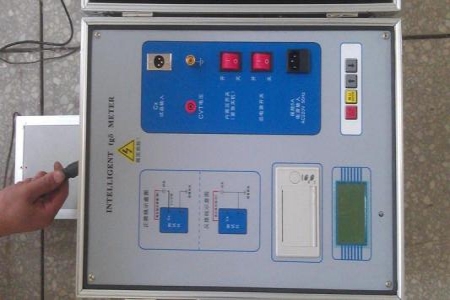
Strong Portability: Modern cable fault testers have a compact design, easy to carry to the site for operation.
Easy Operation: User-friendly interface design allows even personnel without professional background to easily get started.
Multi-Function Integration: Some high-end models integrate multiple detection methods mentioned above, providing more comprehensive solutions.
Data Management: Equipped with data storage and transmission functions, facilitating subsequent analysis and report generation.
Usage Precautions
When using cable fault testers, the following points should be noted to ensure safety and accuracy:
Ensure compliance with all relevant safety guidelines and operating procedures.
Before starting the test, the power must be cut off and both ends of the cable must be properly handled to avoid electric shock hazards.
Select the appropriate test method and technical parameter settings based on the cable type and expected fault type.
In summary, the cable fault tester is a very important tool that can not only effectively diagnose cable faults but also significantly improve the stability and safety of power systems. With technological development, such equipment will become more intelligent in the future, providing users with more convenient services.