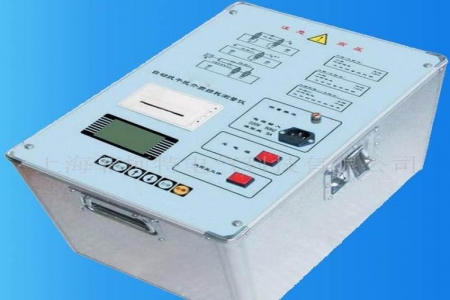
Insulation Resistance Tester, also known as Megohmmeter
or high-resistance meter, is an instrument used to measure the resistance value of insulating materials in electrical equipment. It is crucial for evaluating the safety and reliability of electrical systems and is widely used in power systems, industrial facilities, and household appliances. Below is some detailed information about insulation resistance testers:
Application
Preventive Maintenance: Regular use of insulation resistance testers can detect potential problems in advance, such as aging, contamination, or damaged insulation materials, thereby avoiding unexpected downtime or safety accidents.
Fault Diagnosis: When electrical equipment has problems, testing can help determine whether the problem is caused by poor insulation.
Installation Acceptance: After new equipment is installed, use the insulation resistance tester to ensure its insulation performance meets the manufacturer's requirements.
Working Principle
The insulation resistance tester typically applies a DC voltage to the equipment under test and measures the tiny leakage current flowing through the insulator. Based on Ohm's Law R = V/I
where R is resistance, V is voltage, and I is current, the insulation resistance value is calculated. Modern testers also provide automated functions, such as automatically selecting the appropriate test voltage, automatically recording test results, etc.
Test Voltage Levels
The test voltage range provided by insulation resistance testers can range from 50V to several thousand volts, depending on the type of equipment under test and the expected application scenario. For example:
Low-voltage equipment (such as household appliances) may only require a 500V test voltage.
Medium-voltage equipment (such as motors, generators) may require a 1000V or higher test voltage.
High-voltage equipment (such as transmission lines, transformers) may require up to 5000V or even higher.
Usage Precautions
Safety: Before conducting any test, ensure the equipment has been de-energized and properly discharged to prevent electric shock accidents.
Environmental Conditions: Factors such as humidity and temperature can affect test results, so testing should be conducted in a stable environment as much as possible, and the impact of these factors on the test should be considered.
Cleanliness: Ensure test points are clean and free of dust, as dirt or moisture may cause false readings.
Maintenance and Calibration
To ensure the accuracy of measurement results, insulation resistance testers should be calibrated regularly. In addition, routine maintenance is equally important, including keeping the equipment clean and correctly storing and transporting equipment according to the manufacturer's guidelines.
Technological Development
With technological advancement, modern insulation resistance testers are not limited to simple resistance measurement but also integrate more functions, such as:
Data Recording and Analysis: Can save data from multiple tests, facilitating long-term tracking and trend analysis.
Wireless Transmission: Supports Bluetooth or Wi-Fi connectivity for convenient remote monitoring and data upload.
Graphical Display: Equipped with an LCD screen to visually display the testing process and results.
If you are looking for more in-depth technical information or an introduction to specific models of insulation resistance testers, it is recommended to consult professional product manuals or contact the manufacturer for the latest information. We hope the above information helps you better understand insulation resistance testers and their applications.