Underground Pipeline Detector
Darui Electric recommends:
The underground pipeline detector can quickly detect pipes, cables and their location, direction, depth and coating defects without damaging the ground surface.。
It is an essential tool for water/gas companies, railway communications, mining and construction units for underground pipeline surveying.
Classification
1. Uses electromagnetic induction principle to detect metal pipes, cables and non-metal pipes with metal markers., referred to as pipeline detector.
Advantages: fast detection speed, simple and intuitive, easy operation, high accuracy.
Disadvantages: when detecting non-metallic pipelines, non-metallic probes must be used; this method is more laborious and requires intrusion into the pipeline interior.
2. Another type uses electromagnetic waves to detect underground pipelines of all materials, and can also be used to locate buried objects, commonly known as radar, also called pipeline radar.
Advantages: can detect pipelines of all materials
Disadvantages: higher environmental requirements, poor depth measurement capability (difficult to detect deeply buried pipelines), high requirements for operator skill and experience.
No instrument is perfect; they need to be used in combination to achieve their full potential
Traditionally, pipeline detectors refer only to those using electromagnetic induction principle, which are also the most widely used instruments
Components
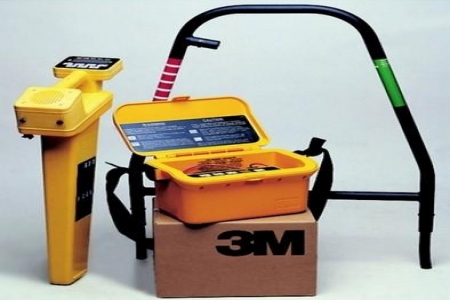
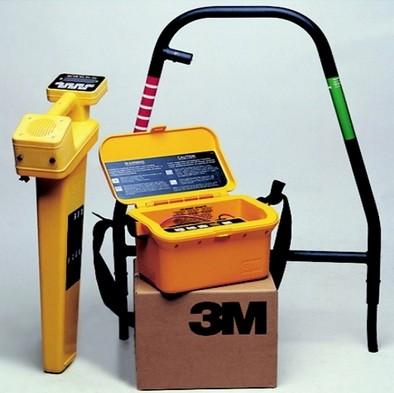
Generally consists of two main parts:
1. Transmitter: applies a special frequency signal current to the pipeline under test, generally using three excitation modes: direct connection method, induction method and clamp method
2. Receiver: the receiver has a built-in induction coil that receives the magnetic field signal of the pipeline; the coil generates induced current to calculate the pipeline direction and path. Generally there are three receiving modes: peak mode (maximum), null mode (minimum), wide peak mode; more advanced instruments typically feature peak arrow mode (combining advantages of both peak and null modes for more intuitive operation) and compass guidance (for indicating pipeline direction).
There are also some accessories that work with the two main components.
How to Choose
1. According to your needs: many pipeline detectors are only suitable for certain detection requirements; when choosing, understand the detector thoroughlyits scope of application
2. Understand the testing methods of the detector, whether operation is simpler and the interface more intuitive
3. Understand the detector functions, whether depth measurement capability meets your requirements
4. Whether accessory configuration is complete, such as clamps (generally used for cable detection in dense areas), rechargeable batteries (saving detection costs), etc.
5. Sustainable development of the instrument; with rapidly evolving technology, upgradeability is also a criterion for evaluation
6. Instrument compatibility; whether receiving and transmitting frequencies are broad enough to facilitate detection and expand applications.
Note: The above information and technical parameters are compiled and published by Yangzhou Darui Electric Co., Ltd.