Cable Identifier
Darui Electric recommends:
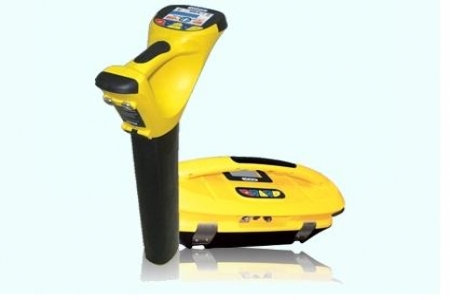
Cable Identifier is used in power cable laying, relocation, maintenance and fault handling to identify a specific cable among a bundle of cables.; Features accurate cable identification (dual qualitative and quantitative discrimination), fast, accurate, simple operation, and wide application.
It plays an important role in cable construction and maintenance. Live cable identifier uses MCU technology at the transmitter to encode signals, driving large-aperture clamps to transmit phase-encoded signals with an average value of 0. The receiver MCU decodes and identifies the phase of the received signal. Based on the unique phase characteristics of the target cable signal, the target cable is identified from a large bundle of other cables. The live cable identifier can also directly connect the output signal to de-energized cables, capable of identifying ground loops up to 1000 ohms. It is a lightweight, compact, portable instrument suitable for all types of HV/LV power cables.
Main Features
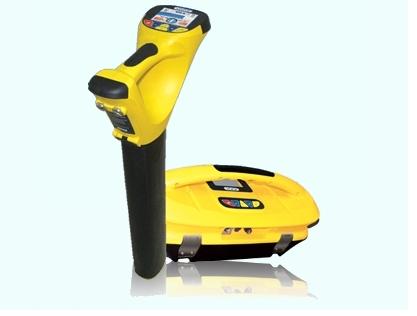
The instrument consists of a current pulse transmitter, receiver, transceiver clamps, and connecting wires. It features high-power current pulse output, clear on-site signal reception, portability, lightweight flexibility, high sensitivity, effective 50Hz interference suppression, and accurate, fast identification. Reliable protection circuits tolerate output short circuits. Large clamp jaw (φ150mm) accommodates various cable cross-sections. A built-in high-power isolation transformer ensures no direct electrical contact between operator and mains. Never touch black/red clamp wires when the instrument is energized.
Brief Working Principle
Since operating live cables cannot have ground or connection lines broken, and the identifier output cannot be directly applied to energized conductors, live cable identification must solve two challenges: first, coupling the identification signal onto the cable; second, the coupled signal is small while the operating cable carries 50Hz unbalanced current, induced 50Hz interference, and distributed capacitive currents creating 50Hz electromagnetic interference that the receiver clamp must overcome.
Our live cable identifier uses MCU encoding/decoding and PSK technology widely used in communications. The transmitter clamp sends phase-encoded signals with an average value of 0. The receiver clamp's MCU processes the received signal through hardware and software filtering, then performs phase recognition. When the receiver clamp is placed on the cable in the current direction, the identified cable's ammeter deflects right with audible and visual indication. Other cables have opposite current direction, causing left deflection without audible/visual indication. This demonstrates the uniqueness of the target cable, making it easy to distinguish from multiple cables. Since signal current strength is consistent along the entire cable length, the receiver clamp receives uniform electromagnetic signal strength, meaning identification is not limited by cable length in principle.
Note: The above information and technical parameters are compiled and published by Yangzhou Darui Electric Co., Ltd.