High-Voltage Wireless Phase Detectors Are Used in Power Systems for Detecting Whether Two Power Sources or Lines
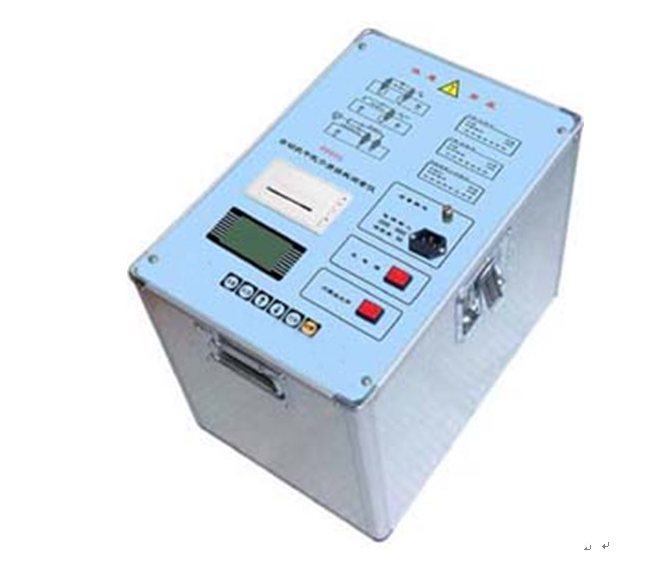
A key safety instrument for detecting whether phases are consistent between two power sources or lines, widely used in the construction, maintenance, switching operations, and grid connection of substations, power plants, and distribution networks. Forcibly closing switches with inconsistent phases will lead to severe phase-to-phase short circuit accidents. Based on the latest market developments and technical standards from 2025-2026, here is a detailed guide on high-voltage wireless phase detectors: 1. Core Functions and Working Principle Non-Contact Measurement: Senses high-voltage electric field signals through the collector (transmitter) at the front end of the insulation rod, without direct electrical connection, ensuring operator safety. Wireless Transmission: The collector transmits data such as phase, frequency, and voltage amplitude to the receiving host via radio frequency (RF) or Bluetooth technology, with transmission distances typically ranging from 30m to over 150m, capable of penetrating walls and obstacles. Intelligent Judgment: The host automatically compares the phase difference between two signals, voice-announces "same phase" or "attention, different phase," and displays the phase angle (error typically ≤5°). Multi-Function Integration: Modern high-end models typically integrate high-voltage detection, phase sequence judgment, frequency measurement, and transformer group analysis. Applicable Voltage Levels: Covers 10kV, 35kV, 110kV, 220kV, up to 550kV and above UHV lines. 2. 2026 Mainstream Brands and Manufacturer Recommendations The domestic market has formed an industrial cluster centered in Wuhan, while some international brands still hold a place in the high-end segment. Domestic Leading Brands (cost-effective, fast service response) Based on 2025-2026 industry reputation and procurement data, the following brands stand out: Wuhan UHV Power Technology Co., Ltd.: Features: Significant technical breakthroughs in "wireless transmission stability" and "anti-interference capability" in recent years, listed as a preferred brand by multiple State Grid provincial companies. Their military-grade wireless modules have high signal stability in strong electromagnetic environments. Applications: Complex electromagnetic environments, long-distance through-wall phase detection. Wuhan Huatian Electric Power Automation Co., Ltd.: Features: Established power testing equipment manufacturer with mature product lines, compliant with latest industry standards such as DL/T 1347-2014, widely used in State Grid Class A projects. Applications: Conventional substation O&M, major repair and technical renovation projects. Wuhan Guodian Xigao Electric Co., Ltd.: Features: Focuses on high precision and full-scenario adaptability, products exported overseas, suitable for scientific research or metrology departments with extremely high measurement accuracy requirements. Shanghai Shengxu Electric, Yangzhou Tuopu, etc.: Also reliable suppliers commonly found in the market, offering customized solutions for various voltage levels. International Renowned Brands France CA (Chauvin Arnoux), USA Fluke: Features: Exquisite craftsmanship and extremely high safety, but expensive (typically 5-10 times the price of domestic products), with fewer models adapted for China unique UHV grids (such as above 500kV). Applications: Foreign-funded power plants and foreign-related projects with strict brand requirements. 3. Key Selection Indicators When purchasing, focus on the following parameters: Voltage Level Matching: Must select a model that covers the voltage level of the line under test (e.g., testing a 110kV line requires an instrument supporting 110kV and above). Transmission Distance and Penetration: Standard: ≥30m. Enhanced: ≥100m (suitable for phase detection through walls and buildings). Anti-Interference Capability: Under strong electromagnetic fields in substations, whether signals remain uninterrupted and data stable (check for dual-antenna or frequency-hopping anti-interference technology). Voltage Detection Function: Whether it has audible and visual voltage detection alarms to confirm the line is live before phase detection. Protection Rating: IP65 or above recommended, adaptable to outdoor rain, snow, and dust environments. Compliance: Must comply with DL/T 1347-2014 "General Technical Conditions for High-Voltage Wireless Phase Detectors" and latest safety regulations. 4. Price Reference Range Basic (10kV-35kV): ¥2,000 - ¥5,000. Professional (10kV-220kV, with voice/large screen): ¥6,000 - ¥15,000. High-End (500kV and above, ultra-long distance/strong anti-interference): ¥20,000 - ¥50,000+. Note: Imported brands typically start at ¥30,000, up to ¥100,000. 5. Safety Operating Precautions (Critical) Voltage Detection First: Before phase detection, always use the instrument voltage detection function to confirm the line is live to prevent misjudgment. Insulation Check: Before use, always check that the insulation rod surface is clean, dry, and crack-free, and confirm the insulation rod is within its valid test period. Safety Distance: Operators must maintain the safety distance specified in safety regulations from live parts (e.g., 10kV ≥0.7m, 110kV ≥1.5m, etc.); crossing boundaries is strictly prohibited. Same-Phase Judgment Logic: First test both transmitters on the same phase line to confirm the instrument displays "same phase" (self-test verification). Then contact the two lines to be compared separately. Environmental Impact: Outdoor high-voltage phase detection is strictly prohibited during thunderstorms, heavy fog, or extreme humidity (>85%). Regular Calibration: The instrument should be sent to a qualified metrology institution annually for calibration to ensure data accuracy. 6. Application Scenario Examples Dual Power Supply Switching: Before putting backup power into operation, confirm phase consistency with the main power supply. Line Modification: After laying new cables or overhead lines, confirm the phase correspondence at both ends (A to A, B to B, C to C). Ring Main Unit Operation: Perform phase detection before closed-loop operation to prevent circulating current surges. Distributed PV/Wind Power Grid Connection: Confirm phase synchronization between the generation side and the grid side.