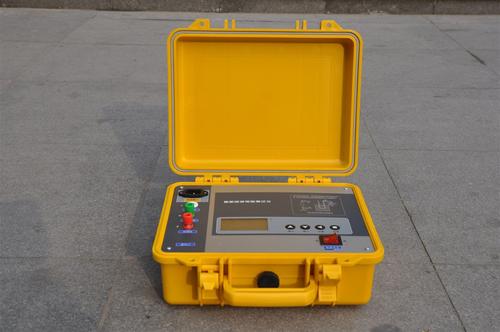
High-Voltage Wireless Phase Detector - Key Tool for Ensuring Synchronized Power System Operation
Introduction
Technical content regarding power testing equipment. [Article 41]
1. Working Principle of High-Voltage Wireless Phase Detectors
High-voltage wireless phase detectors primarily use radio wave transmission technology to collect and analyze phase information from high-voltage lines. The workflow is generally as follows:
(1) Signal Acquisition
Technical content regarding power testing equipment. [Article 41]
Encoding and Transmission: The sensed electrical signals are processed and encoded into data packets of a specific format, then transmitted using the built-in low-power radio transmission module.
(2) Signal Reception and Decoding
Technical content regarding power testing equipment. [Article 41]
(3) Phase Comparison and Result Display
Technical content regarding power testing equipment. [Article 41]
2. Functional Features
(1) High Safety
Because wireless communication is used, measurement tasks can be completed without direct contact with high-voltage parts, greatly reducing the risk of electric shock for workers.
(2) Easy Operation
Modern high-voltage wireless phase detectors are typically equipped with user-friendly interfaces, supporting one-touch start, automatic recognition, and other features, making them easy to use even for non-professionals.
(3) Strong Adaptability
Applicable to various voltage levels of transmission and distribution networks, including but not limited to common levels such as 10kV, 35kV, and 110kV, and not restricted by weather conditions.
(4) Reliable Accuracy
With advanced electronic technology and precision algorithms, it provides accurate and reliable phase difference values, with error typically controlled within ±1°.
III. Application Scenarios
(1) Power Engineering Commissioning
After completion of new substations or transmission lines, used to verify that connections between phases are correct.
(2) Routine Inspection and Maintenance
Regularly checks existing grid facilities for phase sequence errors and other issues to prevent potential faults.
(3) Emergency Repair
During sudden power outages, quickly locates the problem and takes appropriate measures to restore normal power supply.
4. Purchase Guide
When selecting a suitable high-voltage wireless phase detector, the following aspects should be considered:
Applicable Voltage Level: Determine the maximum voltage range required for testing based on the actual working environment.
Measurement Accuracy: Select products with sufficient accuracy based on specific requirements. Generally, ±1° meets the needs of most applications.
Portability: Considering that on-site work may require frequent movement, lightweight and portable designs are preferred.
After-Sales Service: A good after-sales support system is crucial for long-term stable use.
Conclusion
Technical content regarding power testing equipment. [Article 41]
Technical content regarding power testing equipment. [Article 41]