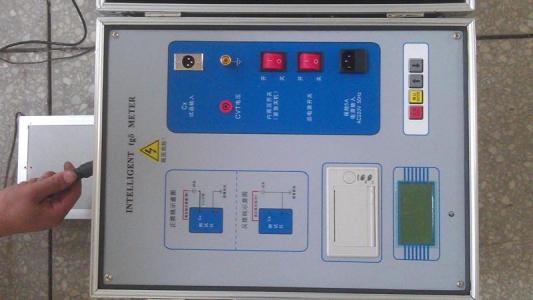
Introduction to Loop Resistance Tester
Technical content regarding power testing equipment. [Article 44]
1. Working Principle
Technical content regarding power testing equipment. [Article 44]
, the resistance of the circuit under test can be determined. This method provides precise resistance measurement results, even at milliohm-level low resistance values.
To obtain more accurate results, some advanced models of loop resistance testers can output high currents of up to several hundred amperes to overcome errors caused by contact resistance.
2. Main Functions and Features
High-Precision Measurement: Uses advanced measurement technology to achieve precise measurement of resistance down to micro-ohm levels.
High Current Output: To obtain the most accurate measurement results, certain high-end loop resistance testers can output high currents of up to several hundred amperes.
Automatic Range Selection: Features automatic range adjustment to accommodate resistance measurement needs across different ranges.
Data Storage and Analysis: Supports saving measurement data, with further data analysis and report generation available through companion software.
Portable Design: Many modern loop resistance testers feature compact and lightweight designs, convenient for on-site use.
III. Application Scenarios
Power System Maintenance and Repair: Regularly checks the contact resistance of high-voltage electrical equipment such as circuit breakers and disconnect switches to ensure normal operation.
Acceptance Testing for New Projects: Conducts contact resistance testing on newly installed electrical equipment before commissioning to verify compliance with technical specifications.
Industrial Facility Management: Performs contact resistance testing on electrical equipment such as motors and control cabinets in factories to prevent faults caused by poor contact.
Scientific Research and Education: Used in laboratory environments to study the electrical properties of materials or as a teaching tool to help students understand the concept of resistance.
4. Usage Precautions
Select Appropriate Test Current: Choose the proper test current for different test objects to obtain the most accurate results.
Ensure Good Contact: Before testing, always confirm good contact between the test probe and the object under test to avoid affecting measurement results due to poor contact.
Follow Safety Procedures: Due to high current operation, strictly follow safety operating procedures when using loop resistance testers and wear necessary personal protective equipment.
5. Summary
Technical content regarding power testing equipment. [Article 44]