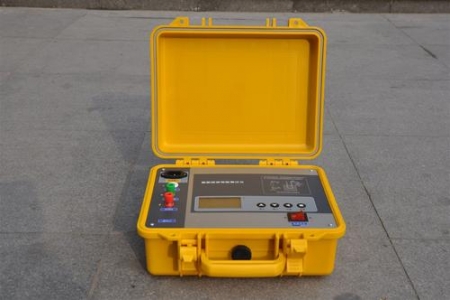
The High-Voltage Wireless Phase Tester is a specialized instrument for detecting phase relationships in high-voltage transmission lines
Below is an article overview about High-Voltage Wireless Phase Testers.
HV Wireless Phase Detector
Overview
The High-Voltage Wireless Phase Tester is a specialized instrument for detecting phase relationships in high-voltage transmission lines. It can measure phase differences between lines through wireless transmission technology without directly contacting high-voltage lines, ensuring the safe and stable operation of power systems.
Main Functions
Phase Measurement: Measures phase differences between high-voltage lines.
Wireless Transmission: Transmits phase measurement data via wireless communication technology.
Remote Operation: Operators can perform measurements from a safe distance.
Data Recording: Records measurement results for subsequent analysis.
Working Principle
High-Voltage Wireless Phase Testers typically consist of a transmitter and a receiver. The transmitter is installed on the high-voltage line, obtaining the line voltage signal through inductive coupling, then wirelessly transmitting the signal to the receiver. After receiving the signal, the receiver processes it through a built-in processor to calculate the phase difference between lines.
Usage Steps
Install Transmitter: Install the transmitter on the high-voltage line, ensuring secure installation.
Start Receiver: Start the receiver and set the receiving parameters.
Measure Phase: The transmitter sends signals to the receiver via wireless transmission, and the receiver displays the phase difference.
Record Data: Record measurement results, including information such as phase differences between lines.
Technical Features
Non-Contact Measurement: No direct contact with high-voltage lines, improving operational safety.
Wireless Transmission: Transmits data via wireless technology, avoiding the trouble of long-distance wiring.
High Precision: Capable of accurately measuring phase differences, ensuring the accuracy of measurement results.
Remote Operation: Operators can work from a safe location away from high-voltage lines.
Application Scenarios
Power System Maintenance: Used for power system maintenance to ensure correct phase relationships between lines.
Fault Diagnosis: When a fault occurs in the power system, phase difference measurement helps identify the cause of the problem.
New Line Phase Verification: Used to verify phase relationships between lines when building or expanding power lines.
Notes
Safe Operation: Follow safe operating procedures to ensure operator safety.
Correct Installation: Ensure the transmitter is correctly installed on the high-voltage line.
Environmental Factors: Pay attention to temperature, humidity, and other conditions in the testing environment to ensure the accuracy of test results.
Conclusion
The High-Voltage Wireless Phase Tester is an important tool in power system maintenance and fault diagnosis. Through non-contact measurement and wireless transmission technology, it can effectively ensure the safe and stable operation of power systems.
The above is an overview of High-Voltage Wireless Phase Testers. If you need more detailed information or introductions to specific applications, please let us know your specific requirements.