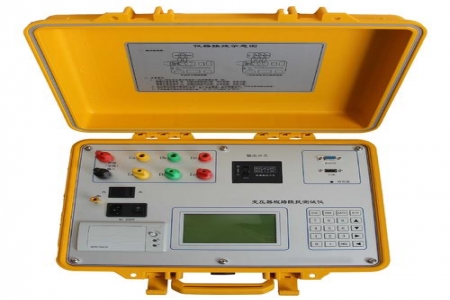


Working Principle of Ultrasonic Partial Discharge Tester
The Ultrasonic Partial Discharge Tester detects the presence of partial discharge by capturing ultrasonic signals generated by partial discharge. Since partial discharge produces high-frequency sound waves or ultrasonic waves, these signals can be converted into audible sounds or electrical signals for analysis and recording.
Usage Scenarios
Power Transformers: Monitor the insulation condition inside oil-immersed or dry-type transformers.
High-Voltage Switchgear: Inspect the health condition of internal components in switchgear.
Cable Joints: Evaluate the partial discharge level at cable terminations and intermediate joints.
Generators and Motors: Detect abnormal conditions in stator windings, rotor windings, and bearings.
Detection Steps
Preparation Phase: Select appropriate detection equipment and ensure it is working properly.
On-Site Setup: Arrange the site according to detection objectives, such as turning off unrelated power sources.
Data Acquisition: Use the tester to scan and record ultrasonic signals.
Data Analysis: Analyze the collected data to determine whether partial discharge exists.
Report Writing: Organize detection results and write detailed detection reports.
Notes
Safety First: Before conducting detection, ensure all safety measures are in place.
Environmental Factors: Pay attention to the potential impact of environmental noise on detection results.
Professional Training: Operators need professional training to correctly interpret detection results.
Conclusion
As a non-intrusive detection method, ultrasonic partial discharge detection can monitor power equipment without power interruption, greatly improving maintenance efficiency and safety. With technological advancement, future Ultrasonic Partial Discharge Testers will become more portable, sensitive, and easy to operate.
If you need to write an article about Ultrasonic Partial Discharge Testers, please let us know the specific aspects you wish to cover so that we can provide more detailed information and support.