
Wireless High-Voltage Phase TesterPlays a significant role in power system construction, helping check phase verification of power sources on both sides of circuit breakers. If a dangerous accident occurs, it can cause serious consequences. The Wireless High-Voltage Phase Tester uses electronic and wireless technology, is simple and safe to operate, and complies with relevant quality supervision standards.
1. During use, strictly follow the safety rules and regulations of your unit and comply with the relevant provisions of DL408-91 Safety Work Regulations (Power Plant and Substation Electrical Section). Carefully maintain the instrument and regularly check insulation.
2. During phase verification operations, do not hold beyond the warning position of the insulating rod. This instrument is designed to operate without grounding, but for safety purposes, stable grounding is recommended!
3. The transmitter and receiver of this instrument both use 9V DC batteries, which can last for one and a half years under normal use. If used frequently, the voice volume will noticeably decrease, at which point replace with the same type of battery to avoid affecting normal instrument use.
4. The positive and negative terminals of the battery used in this instrument are on the same side, so when replacing the battery, be especially careful not to insert the battery in reverse, as this may cause battery explosion and unnecessary injury to personnel.
5. If the instrument is not used for a long time, please remove the batteries to prevent battery leakage and corrosion from damaging the instrument!
6. During testing, test personnel should wear insulating shoes and remain at a safe distance outside the hazardous area.
Usage Method
Mainly applied in power-related industries, referring to the use of instruments or other means in power system electrical operations to verify whether the phase or phase sequence of two power sources or loops is the same. That is, in actual power operation, the measurement of phase difference. For newly established substations and transmission lines, as well as after line maintenance and before power delivery to users, three-phase circuit phase verification testing must be performed to ensure that the transmission line phase sequence matches the phase sequence required by the user's three-phase load.
When new power stations connect to the grid or new substations begin operation, phase verification testing is often required. On-site phase verification includes verifying phase sequence and phase position. Phase sequence verification is mainly for the normal operation of generators and motors. In power production practice, phase sequence verification testing must be done before generator grid connection; if the phase sequence is incorrect, the generator cannot be connected to the grid, and forced grid connection can cause equipment damage. During power grid renovation, attention should also be paid to maintaining the original phase sequence of the grid to avoid causing trouble for users.
For generator and motor rotors, connect excitation current according to the factory-required positive and negative terminals. Check phases A, B, and C in the stator lead wires in sequence toward the grid side, while identifying locations for phase sequence adjustment. If the grid phase colors are correct, the probability of successful phase verification is high. For motor phase verification, power on and check the rotation direction to determine the phase sequence.
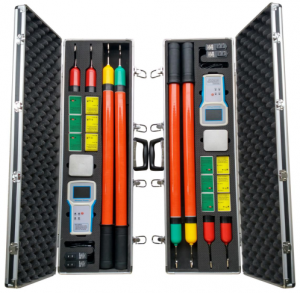
The Wireless High-Voltage Phase Tester is specifically designed for phase verification and phase sequence checking of power lines and substations in power systems, with functions including phase verification, phase sequence measurement, and voltage detection. The Wireless High-Voltage Phase Tester has strong anti-interference capability, complies with EMC standards, and adapts to various electromagnetic interference environments. The measured high-voltage phase signal is collected by the collector, processed, and then directly transmitted. The phase tester receives the signal and performs phase comparison, providing qualitative results of the phase verification.