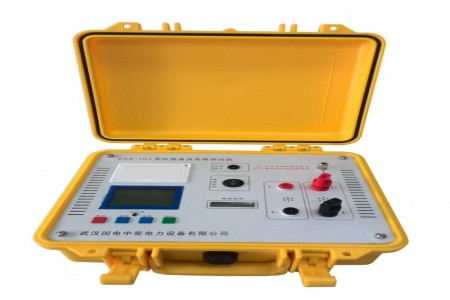


The Instrument Transformer Characteristic Tester Is a Specialized Device for Testing Instrument Transformers
The Instrument Transformer Characteristic Tester is a device specifically designed for testing the characteristics of instrument transformers (including Current Transformers CT and Voltage Transformers PT). These testers are widely used in power systems to ensure the accuracy and reliability of instrument transformers, thereby guaranteeing the normal operation of the entire power system. This article will introduce the basic concepts, working principles, main functions, and application areas of Instrument Transformer Characteristic Testers.
Instrument Transformer Characteristic Tester Overview
The Instrument Transformer Characteristic Tester is a device used to test the characteristics of instrument transformers under different operating conditions. Instrument transformers are important components in power systems, used to convert high voltage or large current into low voltage or small current for measurement and protection. The accuracy of instrument transformers directly affects the measurement precision of power systems and the operational effectiveness of protection devices.
Working Principle
The working principle of the Instrument Transformer Characteristic Tester is mainly to apply a known standard signal (such as current or voltage) to the instrument transformer, then measure the output signal of the transformer and compare it with the expected value. This allows evaluation of the ratio error, phase angle error, linearity, and other characteristics of the instrument transformer.
Current Transformer Testing
For Current Transformers (CT), the tester typically provides a known current input and monitors the output current of the CT. By comparing the relationship between input and output, the ratio error and phase angle error of the transformer can be calculated, thereby evaluating its accuracy.
Voltage Transformer Testing
For Voltage Transformers (PT), the tester provides a known voltage input and measures the output voltage of the PT. Similarly, by comparing the relationship between input and output voltages, the accuracy and stability of the PT can be evaluated.
Main Functions
The Instrument Transformer Characteristic Tester has multiple functions, including but not limited to:
Accuracy Testing: Measure the ratio error and phase angle error of the instrument transformer to ensure its accuracy under different load conditions.
Linearity Testing: Evaluate the linearity of the instrument transformer across its entire operating range to ensure that output is proportional to input.
Temperature Effect Testing: Detect the impact of temperature variations on instrument transformer performance.
Polarity Testing: Verify whether the wiring polarity of the instrument transformer is correct.
Secondary Winding Resistance Testing: Measure the resistance value of the secondary winding of the instrument transformer.
Excitation Characteristic Testing: For current transformers, the relationship between excitation current and excitation voltage can also be tested.
Application Areas
The Instrument Transformer Characteristic Tester is widely used in the following areas:
Power System Maintenance: Periodically calibrate and test instrument transformers to ensure their accuracy during long-term operation.
New Equipment Acceptance: Before installing new instrument transformers, test them to verify whether their performance meets requirements.
Fault Diagnosis: When the system experiences abnormalities, the tester can be used to diagnose whether the instrument transformer has faults.
Scientific Research and Development: When developing new types of instrument transformers, the tester can be used to evaluate their performance and optimize design.
Usage Precautions
When using the Instrument Transformer Characteristic Tester, the following points should be noted:
Safety First: Strictly follow safety procedures during operation to avoid hazards such as electric shock.
Correct Connection: Ensure proper connection between the tester and the instrument transformer to avoid test failure or equipment damage due to incorrect connections.
Environmental Factors: Pay attention to the impact of environmental temperature, humidity, and other factors on test results, and conduct tests under suitable conditions.
Conclusion
The Instrument Transformer Characteristic Tester is one of the indispensable testing tools in power systems, playing a crucial role in ensuring the accuracy and reliability of instrument transformers. Through regular testing and calibration, problems with instrument transformers can be promptly detected and resolved, thereby ensuring the stable operation of power systems.