Partial Discharge Tester and Its Applications
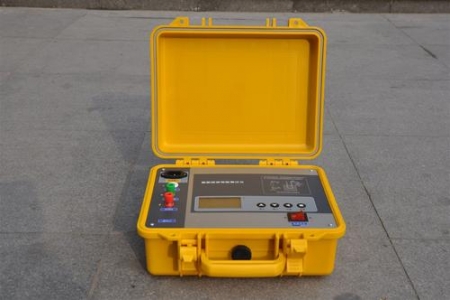
This article aims to explore the basic principles, operating methods, and applications of partial discharge testers in power equipment maintenance and fault diagnosis. Partial discharge is one of the key indicators for evaluating the insulation condition of high-voltage electrical equipment. Through regular monitoring of partial discharge activity, sudden failures in power systems can be effectively prevented and equipment service life can be extended.
1. Introduction
Partial discharge testing technology has become an indispensable part of the power industry. As power systems develop toward higher voltage levels, the demand for partial discharge monitoring is increasing day by day. This article introduces several common partial discharge testing methods and discusses their advantages and disadvantages in different application scenarios.
2. Basic Concepts of Partial Discharge
Definition and Classification
Formation Mechanism
Impact on Power Equipment
3. Working Principle of Partial Discharge Tester
Testing Principle
Main Components
Data Acquisition and Processing Methods
4. Partial Discharge Testing Methods
Ultra-High Frequency (UHF) Detection
Ultrasonic Detection
Very High Frequency (VHF) Detection
Chemical Analysis Method
5. Applications of Partial Discharge Tester
Transformer
Cable
GIS (Gas Insulated Switchgear)
Motor
6. Case Study Analysis
Select a specific power equipment case to demonstrate how the partial discharge tester helps identify potential problems and propose solutions.
7. Conclusion
Summarize the importance of partial discharge testing and future development trends, including application prospects of new technologies.
References
List all referenced literature and data sources.